

KLOW Blend GHK-Cu 50mg / TB-500 10mg / BPC-157 10mg / KPV 10mg | NeuroPept Labs
$119.00
In stock
The KLOW Research Blend 80mg combines four complementary peptides — GHK-Cu (collagen synthesis, ECM remodelling), TB-500 (actin regulation, angiogenesis), BPC-157 (GI and tendon repair), and KPV (alpha-MSH anti-inflammatory tripeptide) — in a single research-grade lyophilized vial. Designed for multi-pathway tissue-repair and inflammation research where complementary receptor mechanisms are under investigation.
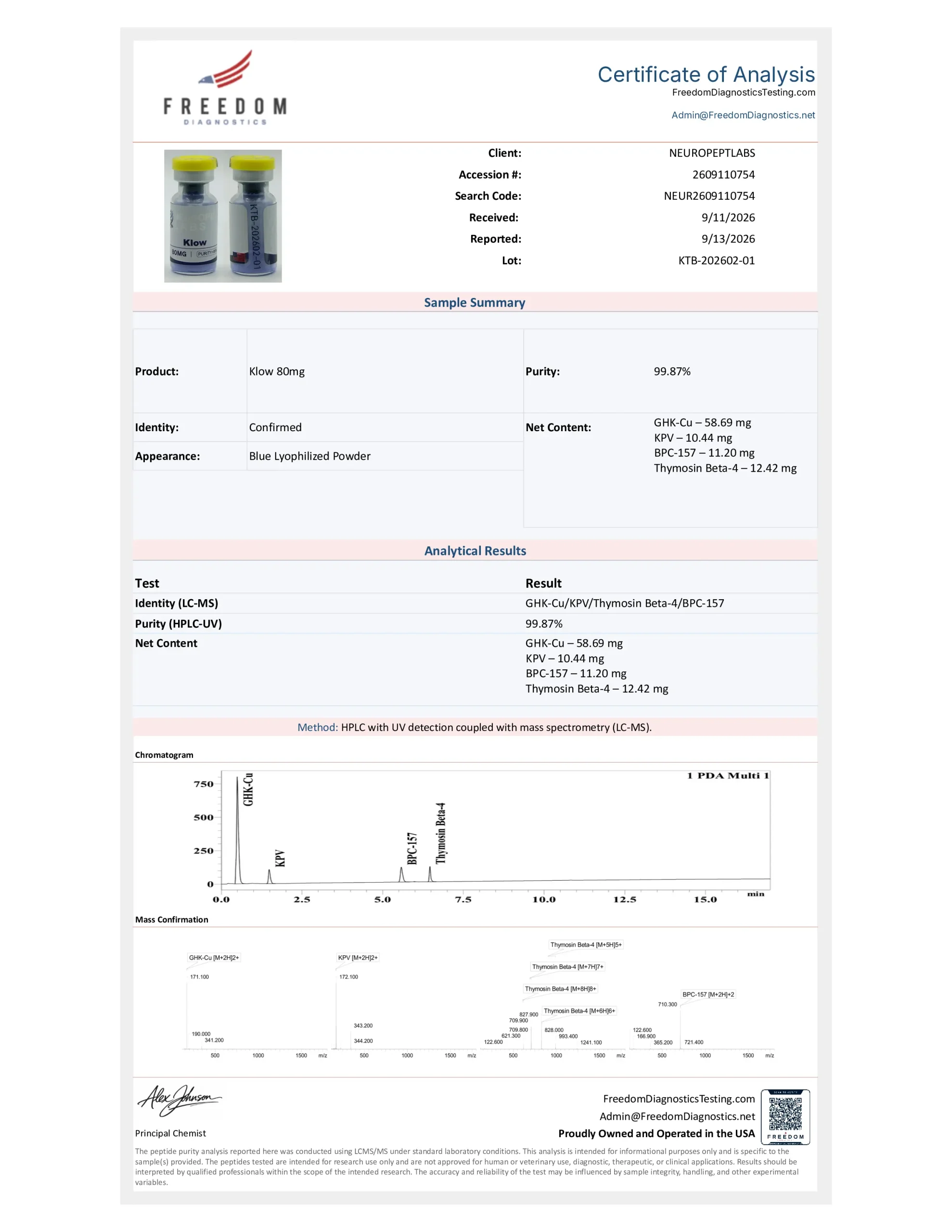
Purity: >99% per component (HPLC verified) | Format: Lyophilized powder | Amount: 80mg total | COA: Verifiable at freedomdiagnosticstesting.com | Intended use: In vitro laboratory research only.
Description
The KLOW Research Blend combines four extensively studied tissue-repair and anti-inflammatory research peptides — GHK-Cu (copper tripeptide), TB-500 (Thymosin Beta-4 fragment), BPC-157 (Body Protection Compound-157), and KPV (alpha-MSH C-terminal tripeptide) — into a single 80mg lyophilized research compound. KLOW extends the widely used GLOW triple blend by adding KPV, giving researchers a four-pathway tool for studying regeneration, extracellular matrix remodelling, angiogenesis, and inflammatory signalling in a single vial.
NeuroPept Labs supplies the KLOW Blend 80mg as a research-grade lyophilized peptide intended strictly for in vitro laboratory and analytical research use. All batches are synthesised under controlled conditions and verified through third-party analytical testing. COA validity can be confirmed at freedomdiagnosticstesting.com using the Accession Number, Client ID, or Search Code found in the product images.
KLOW Blend Peptide Mechanisms (Research Overview)
GHK-Cu — Copper Tripeptide
GHK-Cu (Gly-His-Lys complexed with copper II ion) is a naturally occurring tripeptide with demonstrated activity in collagen synthesis, angiogenesis, and wound-contraction research models:
- Collagen and elastin synthesis — stimulates fibroblast production of collagen types I and III in dermal repair models
- Angiogenesis — promotes VEGF-mediated neovascularisation in wound-repair studies
- Gene expression regulation — modulates thousands of human genes tied to tissue remodelling and antioxidant defence
TB-500 — Thymosin Beta-4 Synthetic Fragment
TB-500 retains the critical LKKTETQ actin-binding domain of Thymosin Beta-4:
- Actin regulation — binds G-actin monomers to regulate polymerisation dynamics critical for cell migration
- Angiogenesis and cell migration — promotes endothelial movement and tubulogenesis in healing tissue
- Anti-fibrotic signalling — reduces fibrotic deposition in cardiac and musculoskeletal models
BPC-157 — Body Protection Compound 157
BPC-157 is a synthetic pentadecapeptide studied for gastrointestinal, musculoskeletal, and vascular repair:
- Gastrointestinal cytoprotection — studied for gut-lining integrity and ulcer healing in rodent models
- Tendon and ligament repair — promotes fibroblast migration and tendon outgrowth
- Angiogenesis via VEGFR2 — enhances new vessel formation through growth-factor receptor pathways
KPV — alpha-MSH C-Terminal Tripeptide
KPV (Lys-Pro-Val) corresponds to residues 11-13 of alpha-melanocyte-stimulating hormone and carries most of its anti-inflammatory activity without pigmentation effects:
- NF-?B inhibition — downregulates the master inflammatory transcription pathway in epithelial and immune cells
- Anti-inflammatory signalling — reduces pro-inflammatory cytokine output in colitis and dermatitis models
- Mucosal and wound biology — studied for attenuating inflammatory responses in gastrointestinal repair research
Why a Blend? Research Rationale
| Peptide | Primary Research Function | Key Pathway |
|---|---|---|
| GHK-Cu | Collagen synthesis, ECM remodelling, gene regulation | Fibroblast activation, VEGF |
| TB-500 | Cell migration, actin regulation, angiogenesis | Actin-G, endothelial migration |
| BPC-157 | GI repair, tendon healing, vascular repair | VEGFR2, NO system |
| KPV | Anti-inflammatory and mucosal signalling | NF-?B, melanocortin axis |
The complementary receptor targets and tissue-distribution profiles of these four peptides make the KLOW blend a logical subject for combination research protocols where multi-pathway tissue repair and inflammation are under investigation.
Product Specifications
| Specification | Detail |
|---|---|
| Blend Name | KLOW Research Blend |
| Peptide Components | GHK-Cu + TB-500 + BPC-157 + KPV |
| Component Amounts | GHK-Cu 50mg / TB-500 10mg / BPC-157 10mg / KPV 10mg |
| Total Amount | 80mg per vial |
| Format | Lyophilized powder |
| Purity | >99% per component (HPLC verified) |
| Storage | -20°C or below, away from moisture and light |
| Reconstitution | Sterile bacteriostatic water (in vitro laboratory preparation) |
| Intended Use | In vitro laboratory research only |
| COA Verification | freedomdiagnosticstesting.com |
Storage and Handling
- Store lyophilized peptide at -20°C or below prior to reconstitution
- Avoid repeated freeze-thaw cycles to preserve structural integrity
- Protect from direct light, humidity, and room temperature exposure
- Reconstitute using sterile bacteriostatic water under aseptic conditions
- Once reconstituted, store at 4°C and use within recommended research timeframes
Frequently Asked Questions
What is the KLOW peptide blend?
KLOW is a research-grade four-peptide blend combining GHK-Cu, TB-500, BPC-157, and KPV in a single 80mg lyophilized vial. It extends the GLOW triple blend by adding the anti-inflammatory tripeptide KPV, giving researchers a four-pathway tool for tissue repair and inflammation studies.
How does KLOW differ from GLOW?
GLOW combines GHK-Cu, TB-500, and BPC-157 (70mg total) for tissue-repair research. KLOW adds 10mg of KPV, the alpha-MSH derived anti-inflammatory tripeptide, bringing the total to 80mg and introducing an NF-?B modulating anti-inflammatory pathway.
What does KPV contribute to the blend?
KPV is the C-terminal tripeptide of alpha-MSH and retains most of its anti-inflammatory activity without pigmentation effects. In research models it inhibits NF-?B signalling and reduces pro-inflammatory cytokine output, complementing the regenerative activity of the other three peptides.
What purity is NeuroPept Labs’ KLOW 80mg?
Each component of the KLOW blend is supplied at >99% purity, verified by HPLC and third-party analytical testing. Full COA documentation is available for every batch and can be verified at freedomdiagnosticstesting.com.
Scientific References
- Dissection of the Anti-Inflammatory Effect of the KPV alpha-MSH Peptide | PubMed 2003
- Orally Targeted Delivery of Tripeptide KPV Alleviates Ulcerative Colitis | PMC 2017
- Therapeutic Peptides: Current Applications and Future Directions | PMC/NIH 2022
Research Use Disclaimer: All products sold by NeuroPept Labs are intended strictly for in vitro laboratory research and scientific investigation by qualified professionals. They are not approved for human consumption, medical treatment, or veterinary use. Purchasers are responsible for compliance with applicable regulations in their jurisdiction.
Only logged in customers who have purchased this product may leave a review.
Related product(s)
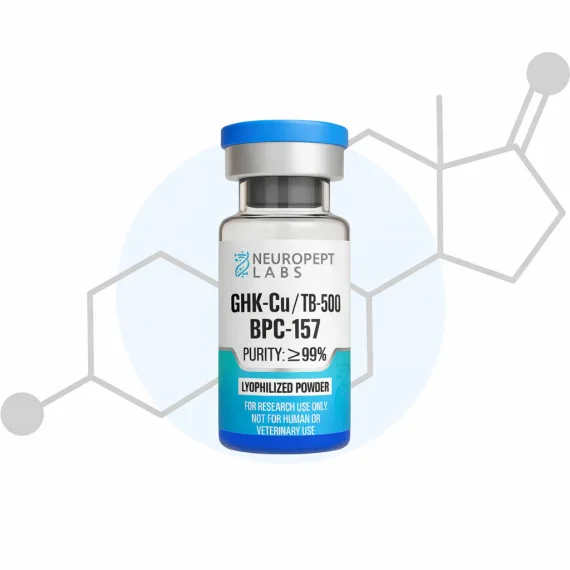
GLOW Blend GHK-Cu 50mg / TB-500 10mg / BPC-157 10mg | NeuroPept Labs
Price range: $99.00 through $220.00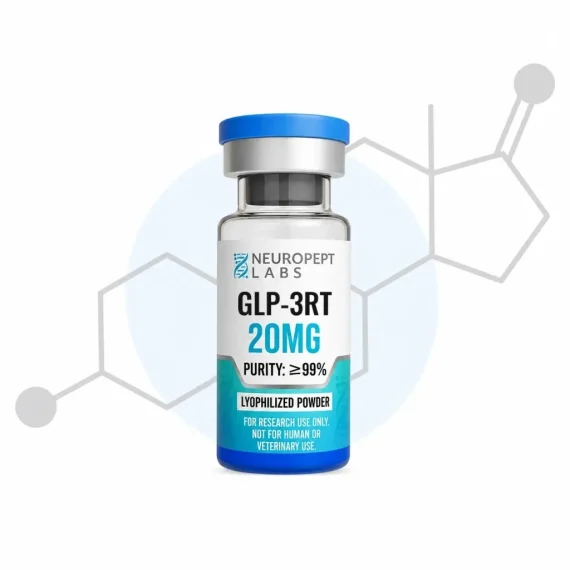
GLP-3RT 20mg | NeuroPept Labs
Price range: $120.00 through $300.00
MOTS-c 10mg | NeuroPept Labs
Original price was: $55.00.$39.00Current price is: $39.00.
GLP-TZ 10mg | NeuroPept Labs
$55.00
GLP-3RT 30mg | NeuroPept Labs
Price range: $185.00 through $495.00
Reviews
There are no reviews yet.