

Sale

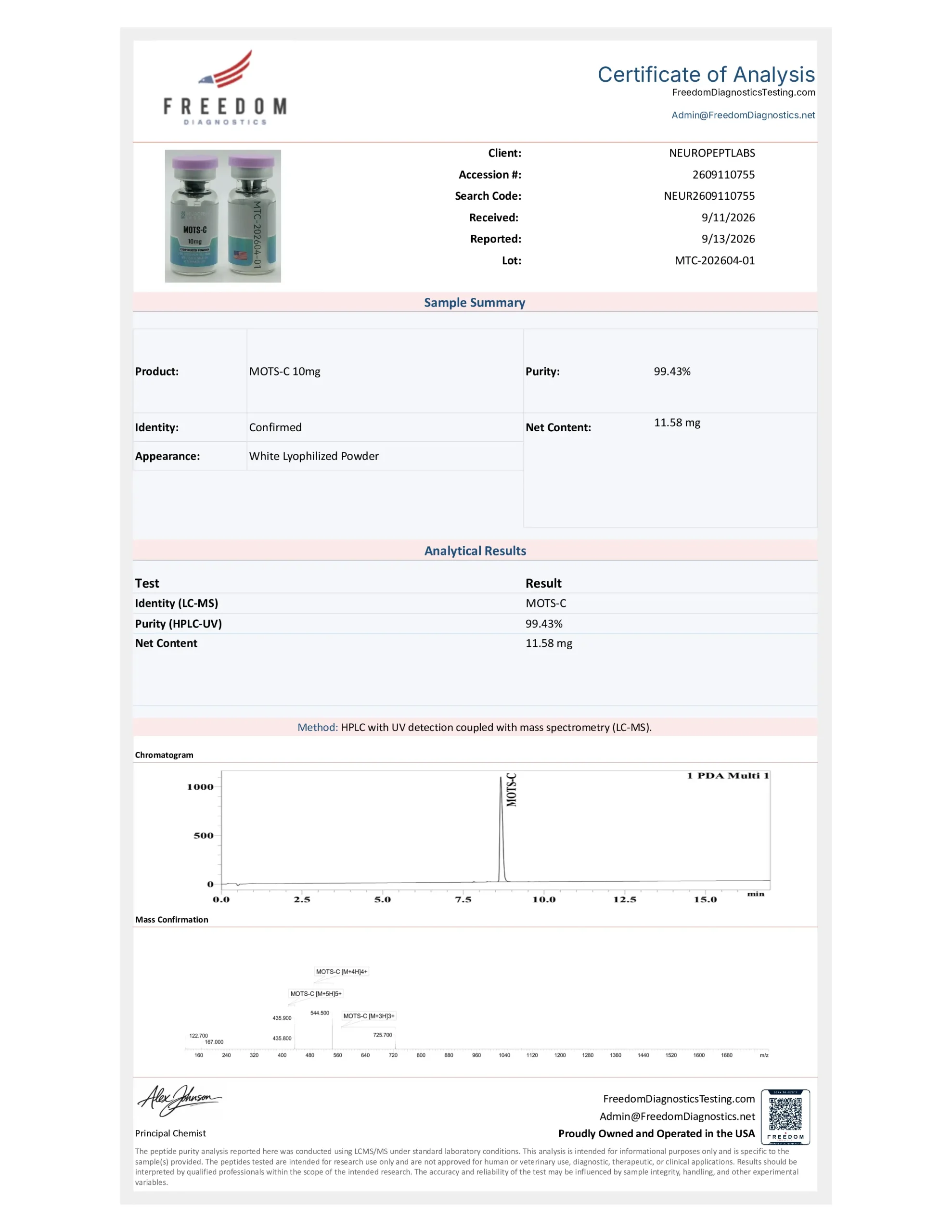
MOTS-c 10mg | NeuroPept Labs
Original price was: $55.00.$39.00Current price is: $39.00.
In stock
MOTS-c 10mg is a research-grade 16-amino acid mitochondrial-derived peptide (MDP) encoded by the mitochondrial 12S rRNA gene “” one of the only known bioactive peptides originating from the mitochondrial genome. Studied for AMPK activation, mitochondrial OXPHOS enhancement, and stress-induced nuclear translocation, MOTS-c is a unique research tool in metabolic disease, cellular ageing, and mitochondrial biology.
Purity: >99% (HPLC verified) | Format: Lyophilized powder | Amount: 10mg | COA: Verifiable at freedomdiagnosticstesting.com | Intended use: In vitro laboratory research only.
Description
MOTS-c (Mitochondrial ORF of the 12S rRNA Type-C) is a 16-amino acid mitochondrial-derived peptide (MDP) encoded by a short open reading frame within the mitochondrial 12S rRNA gene one of the first identified bioactive peptides to originate from the mitochondrial genome rather than the nuclear genome. Since its discovery, MOTS-c has emerged as a critical regulator of cellular metabolic homeostasis, primarily through its activation of AMPK (AMP-activated protein kinase) signalling pathways and its nuclear translocation capacity under metabolic stress conditions.
NeuroPept Labs supplies MOTS-c 10mg as a research-grade lyophilized peptide intended strictly for in vitro laboratory and analytical research use. All batches are synthesised under controlled conditions and verified through third-party analytical testing. COA validity can be confirmed at freedomdiagnosticstesting.com using the Accession Number, Client ID, or Search Code found in the product images.
Mechanism of Action (Research Overview)
Under resting physiological conditions, MOTS-c localises to mitochondria. During metabolic stress, it translocates to the cytoplasm and subsequently to the nucleus, where it directly regulates the expression of nuclear genes involved in energy homeostasis and stress response a unique bidirectional signalling mechanism not seen in nuclear-encoded peptides.
- AMPK activation MOTS-c enhances AMPK-dependent signalling, promoting glucose uptake, fatty acid oxidation, and cellular energy balance in skeletal muscle and other metabolic tissues
- mTOR pathway modulation MOTS-c regulates mTOR signalling pathways involved in cellular growth, proliferation, and autophagy
- Nuclear gene expression regulation upon stress-induced nuclear translocation, MOTS-c influences the transcription of genes governing metabolic adaptation and oxidative stress responses
- Mitochondrial OXPHOS enhancement research in diabetic models shows MOTS-c treatment increases oxidative phosphorylation (OXPHOS) respiration and improves mitochondrial cristae morphology
- Glucose homeostasis MOTS-c-treated models demonstrate decreased fasting glucose levels and improved glucose tolerance through enhanced peripheral glucose utilisation
Research Applications
- Mitochondrial biology mitochondrial-derived peptide signalling, mitochondrial genome expression, and OXPHOS pathway regulation
- Metabolic disease models insulin resistance, type 2 diabetes, and glucose homeostasis research in cell-based and preclinical models
- Ageing and longevity research MOTS-c plasma levels decline with age; research investigates its role in metabolic ageing, sarcopenia, and longevity signalling
- Cardiovascular research cardiac hypertrophy, left ventricular function, and cardiometabolic risk factor modelling
- Exercise physiology MOTS-c is studied as an exercise-mimetic signal, with circulating levels rising in response to physical exertion
- Pancreatic islet research MOTS-c’s role in beta-cell mitochondrial biogenesis, islet function, and protection from metabolic stress
- Neuroprotection emerging research examines MOTS-c in models of neuropathic pain and neuroinflammation via microglial pathway inhibition
Product Specifications
| Specification | Detail |
|---|---|
| Peptide Name | MOTS-c (Mitochondrial ORF of the 12S rRNA Type-C) |
| Origin | Mitochondrial genome (12S rRNA-encoded) |
| Sequence Length | 16 amino acids |
| Format | Lyophilized powder |
| Amount | 10mg per vial |
| Purity | >99% (HPLC verified) |
| Storage | -20°C or below, away from moisture and light |
| Reconstitution | Sterile bacteriostatic water (in vitro laboratory preparation) |
| Intended Use | In vitro laboratory research only |
| COA Verification | freedomdiagnosticstesting.com |
Storage and Handling
- Store lyophilized peptide at -20°C or below prior to reconstitution
- Avoid repeated freeze-thaw cycles
- Protect from direct light, humidity, and room temperature exposure
- Reconstitute using sterile laboratory solvents under aseptic conditions
- Once reconstituted, store at 4°C and use within recommended timeframes
Frequently Asked Questions
What is MOTS-c?
MOTS-c is a 16-amino acid mitochondrial-derived peptide (MDP) encoded by the mitochondrial 12S rRNA gene. It regulates cellular metabolic homeostasis through AMPK and mTOR signalling pathways, and translocates from mitochondria to the nucleus under metabolic stress to directly regulate gene expression involved in energy balance and stress response.
What makes MOTS-c unique compared to other research peptides?
MOTS-c is one of the few known peptides encoded by the mitochondrial genome rather than the nuclear genome. Its ability to translocate between mitochondria, cytoplasm, and nucleus in response to metabolic stress makes it a unique signalling molecule with both intracellular and intercellular regulatory functions a mechanism not seen in nuclear-encoded peptides.
What research areas is MOTS-c most studied in?
MOTS-c is most actively studied in metabolic disease (type 2 diabetes, insulin resistance), mitochondrial biology, ageing and longevity research, cardiovascular function, exercise physiology, and pancreatic islet biology. Emerging research also examines its role in neuroprotection and neuroinflammation.
Scientific References
- MOTS-c Restores Mitochondrial Function in Type 2 Diabetes Frontiers in Physiology 2025
- Mitochondrial-Encoded Peptide MOTS-c Prevents Pancreatic Islet Dysfunction Nature 2025
- MOTS-c: A Promising Mitochondrial-Derived Peptide for Therapeutic Research PMC/NIH 2023
- MOTS-c in Type 2 Diabetes: From Risk Factors to Cardiac Research ScienceDirect 2025
Research Use Disclaimer: All products sold by NeuroPept Labs are intended strictly for in vitro laboratory research and scientific investigation by qualified professionals. They are not approved for human consumption, medical treatment, or veterinary use. Purchasers are responsible for compliance with applicable regulations in their jurisdiction.
Only logged in customers who have purchased this product may leave a review.
You may also like

GLP-3RT 30mg | NeuroPept Labs
Price range: $185.00 through $495.00
GLOW Blend GHK-Cu 50mg / TB-500 10mg / BPC-157 10mg | NeuroPept Labs
Price range: $99.00 through $220.00
GLP-3RT 10mg | NeuroPept Labs
Price range: $84.00 through $210.00Related product(s)

GLP-TZ 10mg | NeuroPept Labs
$55.00
Reviews
There are no reviews yet.