
What Is Bioglutide Peptide?

Bioglutide is a synthetic research peptide that has generated interest within metabolic and receptor signaling research. Peptide-based compounds are frequently investigated in laboratory environments to explore how short chains of amino acids interact with cellular receptors and biochemical signaling pathways.

In modern peptide science, compounds such as Bioglutide are examined to better understand metabolic communication networks, hormone signaling pathways, and receptor-mediated biological processes. Advances in peptide synthesis have made it possible to design molecules capable of interacting with highly specific receptor targets.

Because peptide-based signaling plays a critical role in many biological systems, synthetic peptides remain an important tool for molecular biology and biochemical research.

research peptides GLP-1-based therapies for diabetes, obesity and beyond

For research use only. Not for human or veterinary use.


Peptide Research and Metabolic Signaling

Peptides are short sequences of amino acids that act as signaling molecules within biological systems. Many naturally occurring peptides function as hormones, neurotransmitters, or regulatory molecules that influence cellular communication.

Researchers studying synthetic peptides often focus on three primary areas:

• receptor activation mechanisms
• intracellular signaling pathways
• metabolic regulatory systems

By examining how synthetic peptides interact with receptor targets, scientists can better understand how biological signaling networks function.


Structure of Semaglutide-bound Glucagon-Like Peptide -1 Receptor (GLP-1R) in Complex with Gs Protein

Bioglutide Mechanism of Action (Research Perspective)

Although research into Bioglutide continues to evolve, peptides in this category are typically investigated for their interaction with metabolic receptor systems.

Receptor Binding

Synthetic peptides can interact with receptors located on the surface of cells. When binding occurs, the receptor may trigger signaling events that activate downstream biochemical pathways.

These receptor interactions allow researchers to examine how peptide molecules influence biological signaling networks.

Signal Transduction

After receptor activation, intracellular signaling cascades may occur. These cascades involve complex biochemical pathways that transmit signals from the cell surface into the interior of the cell.

Understanding signal transduction mechanisms is an important aspect of molecular biology research.

Metabolic Pathway Regulation

Peptides involved in metabolic signaling may influence pathways associated with cellular energy balance and molecular communication between tissues.

Laboratory research often investigates how these pathways function under controlled experimental conditions.


Chemical Structure of Semaglutide

Scientific Interest in Synthetic Peptides

Over the past two decades, peptide science has expanded significantly due to improvements in biochemical research techniques. Peptides are widely used in laboratory experiments because they can interact with receptors in highly specific ways.

Areas of research involving peptide molecules include:

• receptor pharmacology
• endocrine signaling systems
• cellular communication pathways
• metabolic biology

The study of peptide signaling continues to provide insights into how cells communicate and respond to environmental signals.


Bioglutide in Molecular Research

Synthetic peptides such as Bioglutide are often used as research tools for studying receptor-ligand interactions and biochemical signaling processes.

These compounds allow scientists to examine how small molecular changes influence receptor activation and biological signaling pathways.

Research into peptide-based compounds may help scientists better understand:

• molecular receptor dynamics
• cellular signaling mechanisms
• metabolic pathway regulation

Such investigations contribute to expanding knowledge in molecular biology and biochemical research.


Laboratory Handling of Research Peptides

Maintaining peptide stability and purity is essential for accurate laboratory research. Synthetic peptides used in experimental environments are typically handled according to strict laboratory protocols.

Recommended research practices may include:

• storage in controlled low-temperature environments
• sterile laboratory handling procedures
• careful reconstitution with appropriate laboratory solvents
• verification of purity through analytical testing

Third-party analytical verification such as high-performance liquid chromatography (HPLC) and mass spectrometry may be used to confirm peptide identity and purity.


Importance of Peptide Research

Peptide molecules represent an important area of study within molecular biology. Because peptides can influence cellular signaling pathways, researchers continue to explore how these molecules interact with receptor systems.

Advances in peptide engineering allow scientists to design increasingly sophisticated molecules capable of interacting with highly specific biological targets.

Through ongoing laboratory investigations, researchers continue to expand understanding of metabolic signaling, receptor biology, and cellular communication networks.


Related Research Topics

Researchers exploring peptide signaling pathways often study multiple compounds that interact with receptor systems. Additional topics frequently investigated include:

• metabolic signaling peptides
• receptor agonist research compounds
• peptide-based molecular signaling studies
• cellular communication pathways

Exploring multiple research peptides can provide a broader understanding of complex biological signaling systems.


Conclusion

Bioglutide is part of a growing class of synthetic peptides used in modern biochemical research. By studying how peptide molecules interact with receptor systems and intracellular signaling pathways, scientists continue to uncover valuable insights into molecular biology and metabolic regulation.

Peptide research remains an expanding scientific field, with ongoing investigations helping to deepen understanding of cellular communication and biochemical signaling mechanisms.


Scientific References

Researchers frequently consult peer-reviewed literature when studying peptide signaling systems. Examples of widely used scientific resources include:

• PubMed – biomedical research database
• National Institutes of Health (NIH) publications
• peer-reviewed molecular biology journals

These sources provide access to thousands of studies exploring peptide signaling and receptor biology.


Research Use Disclaimer

All compounds referenced are intended strictly for laboratory research purposes.

They are not intended for human consumption, medical use, or veterinary applications.


Explore Research Peptides

Researchers interested in high-purity research compounds can explore additional peptides available through the NeuroPeptLabs research catalog, including peptides used in metabolic and signaling research.

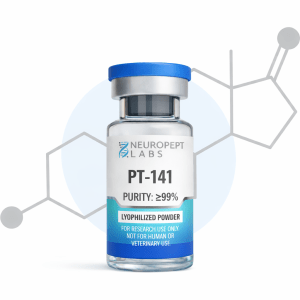
PT-141, also known as Bremelanotide, is a synthetic peptide studied for its effects on sexual arousal, libido signaling, and central nervous system activation. Unlike traditional compounds that work through blood-flow mechanisms, PT-141 acts directly on the melanocortin receptors in the brain, which play a role in sexual motivation and desire.

In research settings, PT-141 has attracted attention for its ability to influence sexual response pathways, libido regulation, and neurological signaling associated with arousal. Scientists studying peptide signaling and neuroendocrine function often explore PT-141 to better understand how melanocortin pathways impact sexual behavior, mood, and hormonal interaction.

PT-141 10mg vial

PT-141 bremelanotide vial peptide NeuroPept Labs

PT-141 is a synthetic heptapeptide derived from the melanocortin system and is most commonly referred to in the literature as bremelanotide. It is structurally related to melanocortin peptide analogues and has been studied as an agonist at melanocortin receptors, especially MC3R and MC4R. In research discussions, PT-141 is often highlighted for its distinct mechanism because it acts primarily in the central nervous system rather than on vascular tissue.

How PT-141 Works

Bremelanotide synthesis schemePT-141 bremelanotide molecule

The primary research interest in PT-141 centers on its agonist activity at melanocortin receptors, especially MC4R, which is heavily expressed in brain regions involved in sexual motivation and behavior. Activation of these receptors triggers downstream intracellular signaling, including cAMP-related pathways, which helps explain PT-141’s central effects. This makes it a mechanistically distinct peptide compared with therapies that rely on nitric oxide and vascular smooth muscle relaxation.

In simpler terms, PT-141 is studied because it may influence the brain’s sexual response circuitry rather than acting directly on blood flow alone. That distinction is one reason it has drawn attention in both preclinical and clinical research settings.

Research Background and Clinical Interest

Brain activation meta-analysis
PT-141 Bramalanotide brain pathway visual

PT-141 first gained attention because animal and early human research suggested that melanocortin receptor activation could produce measurable effects on sexual function. Later clinical research led to bremelanotide being investigated for hypoactive sexual desire disorder, with phase 3 studies showing statistically significant improvements in sexual desire and reductions in distress compared with placebo. Those results made it one of the more recognized peptides in this niche area of research PT-141 clinical research

The broader significance of PT-141 is that it demonstrates how peptide-based compounds can influence behavior through neurochemical pathways, not just through hormonal or circulatory mechanisms. That makes it especially relevant to researchers interested in neuroendocrinology, motivational circuitry, and central receptor signaling.

Why Researchers Study It

PT-141 is frequently discussed in research because it offers a different angle from conventional sexual function therapies. Rather than focusing on vascular response, it is associated with central melanocortin signaling, which opens questions about receptor selectivity, neural pathways, and behavioral outcomes. This makes it useful not only in sexual function research but also in studies of motivation, reward, and hypothalamic signaling Bremelanotide mechanism of action


For educational and academic audiences, PT-141 is a strong example of how peptide pharmacology can bridge molecular biology and functional neuroscience. That combination is part of what keeps it relevant in peptide research discussions today.

Safety, Handling, and Research Context

NeuroPept Labs lab research development peptides

In a research context, PT-141 should be handled according to the appropriate laboratory and institutional standards, with clear attention to purity, storage, documentation, and intended use. As with any research peptide, the quality of the material and the consistency of handling conditions matter when evaluating results or comparing studies. Researchers should always distinguish between laboratory research materials and any regulated or approved pharmaceutical formulations.

Current Research Directions

Current interest in PT-141 continues to focus on receptor selectivity, central signaling, and outcome variability across different study populations. Researchers are also interested in how melanocortin agonists interact with broader neurochemical systems such as dopamine and serotonin. These questions matter because they help explain why PT-141 can produce effects that are central and behavior-linked rather than purely peripheral.

Another area of interest is how bremelanotide may fit into future peptide research pipelines, especially where research-grade sourcing, reproducibility, and formulation quality are important. As the field grows, PT-141 remains a notable compound for laboratories studying the interface between peptides and behavior.

A Subtle Note for Researchers

For labs building a peptide-focused catalogue, PT-141 is one of the compounds many teams keep on their watchlist because of its unique receptor profile and growing research relevance. NeuroPept Labs will be adding PT-141 soon, making it easier for research teams to explore this compound within a high-purity peptide lineup.

Understanding CJC-1295 NO DAC in Research Settings

CJC-1295 NO DAC is a synthetic growth hormone–releasing hormone (GHRH) analog frequently studied in controlled laboratory environments for receptor interaction analysis and endocrine pathway research.

Unlike its DAC-modified counterpart, CJC-1295 NO DAC is characterized by a shorter half-life due to the absence of the Drug Affinity Complex. In research models, this distinction allows investigators to observe acute receptor signaling patterns rather than prolonged systemic interaction.

From a laboratory standpoint, that difference matters. Shorter activity windows often allow more precise observation of pulse-response mechanisms in vitro.

For laboratories working with receptor-binding assays or endocrine modeling systems, compound stability and purity are the primary considerations.


DAC vs. NO DAC: Why the Distinction Matters in Research

The DAC modification extends plasma half-life by binding to albumin. Removing DAC results in:

  • Shorter interaction duration

  • More controlled temporal exposure

  • Reduced long-acting binding behavior

In a research context, that can be valuable when studying:

  • Signaling cascades

  • Pulsatile interaction models

  • Comparative receptor activation

This is not about “better” or “stronger.” It’s about experimental design.


What Researchers Look For When Sourcing CJC-1295 NO DAC

After years in this industry, I can tell you this: researchers don’t care about flashy branding. They care about:

  • ≥98% purity

  • Verified HPLC & MS testing

  • Stable lyophilized format

  • Clear storage protocols

  • Consistent batch documentation

Low-cost suppliers often skip proper analytical verification. That becomes obvious once assay inconsistencies start appearing.

If you are sourcing this compound for controlled laboratory work, ensure you are working with a supplier that provides transparent batch-level documentation.

For laboratories seeking verified material, you can review the specifications of the compounds in our current research catalog including COA documentation and purity validation.


Stability & Storage Considerations

CJC-1295 NO DAC is typically supplied as a lyophilized powder to preserve structural integrity. Standard laboratory storage protocols include:

  • –20°C storage

  • Protection from light

  • Reconstitution with sterile aqueous buffer

As with all peptides, degradation risk increases when exposed to repeated temperature cycling.


Final Thoughts

CJC-1295 NO DAC remains one of the more frequently examined GHRH analogs in experimental research environments. The absence of DAC makes it distinct in kinetic modeling and receptor interaction studies.

The key is not hype — it’s documentation, purity, and reproducibility.

Laboratories that prioritize validated sourcing avoid the downstream problems that come with inconsistent compound quality.

SIGN UP TO OUR NEWSLETTER AND SAVE 10% OFF FOR YOUR NEXT PURCHASE

Let's connect! Access Research-Grade Peptide Insights

Join our research newsletter to receive technical updates, documentation guides, and educational content on synthetic peptides and laboratory standards.
All materials are provided for Research Use Only.