
Lyophilization Explained: Why Research Peptides Ship as Powder

Research-only note: This article is for educational purposes and discusses a compound intended strictly for in vitro and laboratory research. The information below is not medical advice, and the products referenced are not for human consumption.

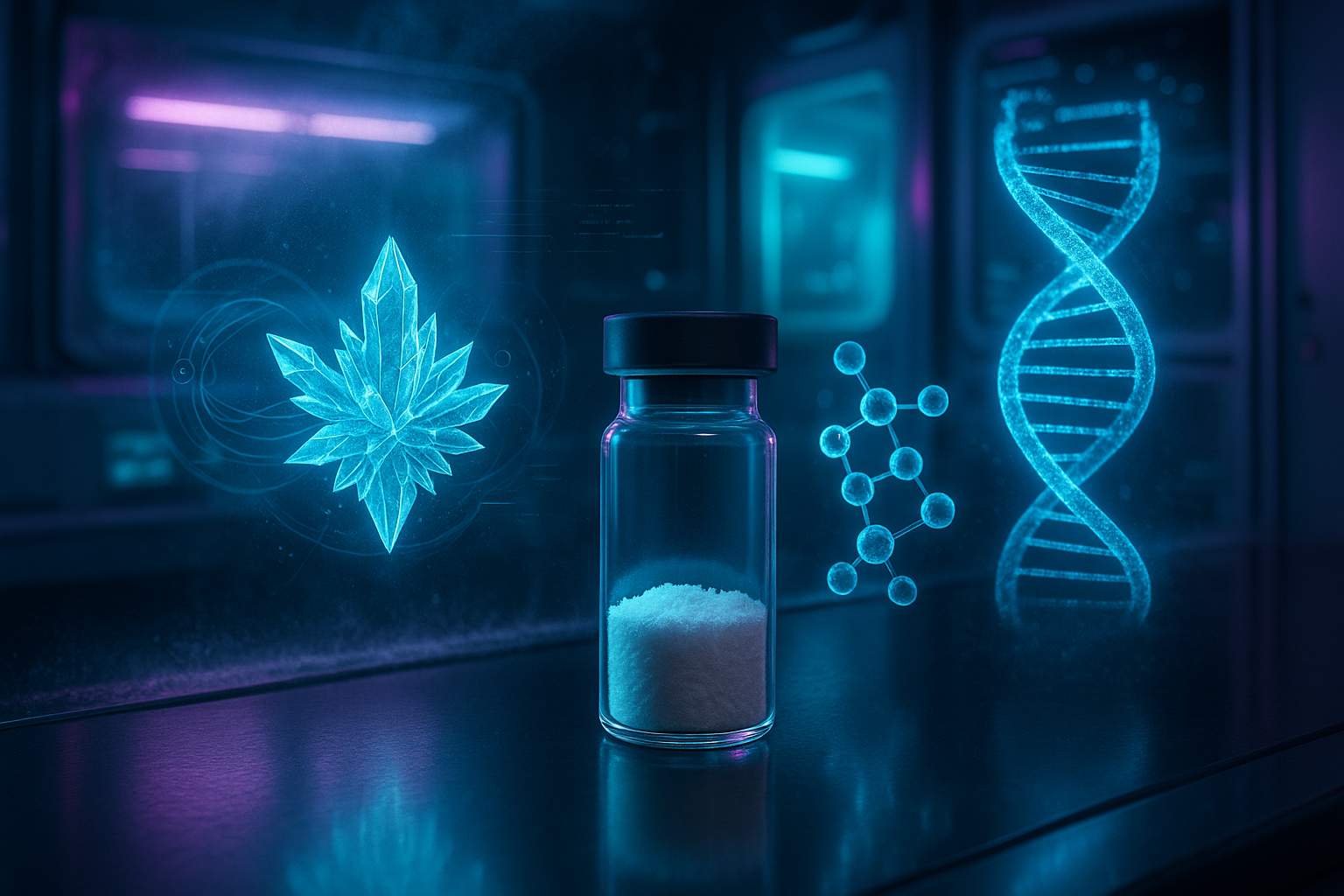
Peptide lyophilization is the controlled freeze-drying process that turns an aqueous peptide solution into a dry, porous solid by removing water through sublimation under vacuum rather than by evaporation. It is why a vial of Ipamorelin 10mg arrives as a white cake instead of a liquid: in the dry amorphous state the compound is far more stable, tolerates ambient shipping, and holds its purity specification for years rather than days. Understanding peptide lyophilization is the fastest way to judge whether a vial has travelled well.

Key takeaways

  • Peptide lyophilization removes water by freezing the solution and subliming the ice under deep vacuum, so the compound never passes through a destabilising warm liquid phase.
  • The cycle has three defined stages — freezing, primary drying and secondary drying — and each is a separate control point.
  • Water is the main reactant in peptide degradation; removing it suppresses hydrolysis, deamidation and aggregation.
  • The visible cake is a process record: an intact, uniform cake indicates drying stayed below the collapse temperature.
  • Residual moisture is driven below 1–2%, because leftover water plasticises the amorphous glass and restarts degradation chemistry.
  • The powder peptide lyophilization produces is a storage format, not a finished preparation — it still has to be reconstituted correctly.

What is peptide lyophilization?

Freeze-drying exploits the phase behaviour of water below its triple point. Drop the pressure below roughly 6 mbar and ice no longer melts on warming — it converts straight to vapour. Peptide lyophilization uses that shortcut deliberately: the solution is frozen solid first, then water is pulled out as vapour, so the peptide never sees a concentrated, warm liquid environment. Most of the damage in conventional drying happens in exactly that phase.

The output is an amorphous glass rather than a crystal. Molecular mobility in that glass is orders of magnitude lower than in solution, and reactive partners are not mobile enough to meet. Peptide lyophilization is the dominant solidification route in pharmaceutical development for this reason, and the process trade-offs are reviewed in the pharmaceutical freeze-drying literature.

  • Physical form: an amorphous, highly porous glass with large internal surface area.
  • Water content: reduced to low single-digit percentages, often below 1%.
  • Reconstitution behaviour: the porous structure rewets in seconds, which is why the cake dissolves fast.
  • Practical result: ambient shipping becomes viable without a validated cold chain.

How the peptide lyophilization cycle works

A peptide lyophilization run is a sequence of three engineered stages, each with its own failure mode. Vials are filled with peptide solution — often with a bulking agent such as mannitol or a stabilising sugar such as trehalose — and partially stoppered before cooling.

  • Freezing: shelf temperature drops to roughly ?40 °C, converting bulk water to ice and concentrating the peptide between the crystals.
  • Ice nucleation control: freezing rate sets crystal size, which sets pore size in the cake and therefore the drying rate.
  • Primary drying: vacuum is applied and heat supplied just fast enough to sublime the ice — the longest phase, removing most of the water.
  • Collapse-temperature limit: product temperature must stay below the collapse temperature, a few degrees above the glass transition of the concentrate.
  • Secondary drying: shelf temperature is raised to desorb the bound water remaining after the ice is gone.
  • Moisture endpoint: peptide lyophilization cycles end on a defined residual-moisture target, not on clock time.
  • Stoppering: vials are sealed under vacuum or backfilled with inert gas before the chamber opens.

The collapse limit dominates cycle design because sublimation is itself a cooling process. Push heat in too hard and the frozen matrix softens and slumps before the ice is gone. Everything else in peptide lyophilization sits downstream of holding that line.

Peptide lyophilization versus solution storage

The clearest case for the dried format compares the three states a research peptide can exist in. Solution-phase peptides degrade through water-mediated chemistry; dry peptides largely do not.

Format Dominant degradation route Practical shelf life Shipping tolerance
Lyophilized powder, sealed Minimal; limited by residual moisture Long-term at ?20 °C; months at ambient High — survives ambient transit
Aqueous solution, refrigerated Hydrolysis, deamidation, oxidation, adsorption to glass Days to a few weeks Low — requires cold chain
Aqueous solution, frozen aliquots Freeze–thaw stress and aggregation Weeks to months if never re-thawed Very low — thaw excursions unrecoverable
  • Hydrolysis needs water: backbone amide bonds cannot be cleaved hydrolytically when almost no water is present.
  • Deamidation is moisture-dependent: asparagine and glutamine residues are far more reactive in solution than in a dry glass.
  • Oxidation targets methionine and tryptophan: dissolved oxygen and trace metals accelerate it, and both are reduced in a dry sealed vial.
  • Adsorption losses disappear: dilute peptides lose material to container surfaces, which peptide lyophilization defers until reconstitution.
  • Dilution is deferred: the researcher picks the final concentration, so one vial suits different assay designs.

Research applications of the dried format

Nearly every peptide used as a laboratory tool compound ships dry. The rationale appears throughout the literature on parenteral peptide and protein delivery, where peptide lyophilization is the default when a molecule is only marginally stable in water.

  • Reference standards: a dry, mass-defined vial is the cleanest basis for calibration curves.
  • Binding and signalling assays: researchers reconstitute to an exact stock molarity rather than trusting a shipped concentration.
  • Long-duration designs: studies running for months can draw from one validated lot.
  • Multi-site work: identical dry vials ship without every site needing cold-chain logistics.
  • Blends: co-lyophilised products such as the GLOW Blend (GHK-Cu, TB-500, BPC-157) hold a fixed component ratio that a solution could not.
  • Comparative pharmacology: tool compounds such as Tesamorelin 10mg and Ipamorelin are studied side by side from equivalently characterised dry material.

Reading the cake: what powder appearance signals

Because peptide lyophilization writes its own process record into the solid, cake appearance is diagnostic. Inspect a vial before reconstituting it — and note that peptide lyophilization at low fill volumes can legitimately produce something that looks like nothing at all.

  • Intact white cake: the expected result — the structure held and drying was uniform.
  • Thin film or scattered flakes: normal at low fill volumes; 10 mg is a very small mass across a vial base.
  • Shrunken or retracted cake: the matrix pulled from the glass, usually cosmetic, but worth the lab record.
  • Collapsed or glassy melt-back: the product exceeded its collapse temperature, which correlates with higher residual moisture.
  • Discolouration: yellowing is not a normal outcome and warrants querying the lot.
  • Visible moisture: a seal-integrity concern, since water ingress restarts hydrolytic chemistry.

These checks are cheap and immediate. Pair them with lot documentation and a disciplined peptide storage routine.

Handling, reconstitution, and quality verification

  • Equilibrate before opening: let a cold vial reach room temperature so moisture does not condense onto the cake.
  • Store sealed and dark: unopened vials are typically held at ?20 °C, protected from light and moisture.
  • Reconstitute gently: run the diluent down the vial wall rather than jetting it onto the cake, and swirl instead of shaking.
  • Choose the diluent deliberately: bacteriostatic or sterile water is standard for in vitro stock preparation, and the choice should be logged.
  • Aliquot immediately: in solution the stability clock restarts, so single-use aliquots prevent repeated freeze–thaw cycles.
  • Log the concentration: record diluent volume against labelled mass so stock molarity stays traceable.
  • Check the documentation: every NeuroPept Labs lot ships with batch-specific third-party analytics, and COA validity is confirmed at freedomdiagnosticstesting.com using the Accession Number, Client ID, or Search Code shown in the product images.
  • Follow a written protocol: the full sequence is covered in the guide to reconstituting research peptides.

Considerations for experimental design

  • Lot consistency: plan long studies around one lot, since peptide lyophilization parameters differ marginally between runs.
  • Excipient awareness: bulking agents and stabilisers are part of the vial contents and matter in sensitive cell systems.
  • Stock age: treat reconstituted stock age as a variable and record it with the result.
  • Temperature logging: document freezer excursions rather than assuming stability held.
  • Container effects: account for adsorption at low stock concentrations in plastic labware.
  • Purity floors: define a minimum acceptable HPLC purity before ordering material.

Clean data begins upstream of the assay. A sound peptide lyophilization cycle, an intact cake, verifiable third-party analytics and a disciplined reconstitution record together mean that variance at the bench belongs to the biology, not the material — the whole argument for sourcing documented compounds such as research-grade Ipamorelin from a supplier that publishes batch-level data.

Frequently asked questions

What is peptide lyophilization?

Peptide lyophilization is freeze-drying applied to peptides. The solution is frozen solid, then water is removed by sublimation under vacuum and by desorption at raised temperature, leaving a dry amorphous cake that is far more chemically stable than the original liquid.

Why are research peptides shipped as a lyophilized powder instead of a solution?

Water drives the main degradation pathways, including hydrolysis, deamidation and oxidation. Peptide lyophilization removes it, so a vial survives ambient shipping and long storage and the researcher chooses the final concentration.

What does a collapsed or shrunken cake indicate?

Shrinkage where the cake pulls away from the glass is often cosmetic. A genuinely collapsed cake suggests the product exceeded its collapse temperature during drying, which is associated with higher residual moisture and faster degradation, so the lot documentation should be reviewed.

Does the amount of visible powder show how much peptide is in the vial?

No. A 10 mg fill is a very small mass and can appear as a thin film or a few flakes after transit. Labelled mass is confirmed by the certificate of analysis, not by how full the vial looks.

How long does a lyophilized research peptide stay stable?

Sealed at around minus 20 degrees Celsius and protected from light and moisture, dry peptides are generally stable for long periods, while reconstituted solutions are measured in days to weeks. Residual moisture and temperature excursions are the limiting factors.

Are lyophilized research peptides approved for human use?

No. All peptides supplied by NeuroPept Labs are sold for in vitro and laboratory research only. They are not approved for human or veterinary use, are not intended to diagnose, treat, cure or prevent any disease, and are not for human consumption.
Research-use-only disclaimer: All products referenced are sold for laboratory and research use only. They are not intended to diagnose, treat, cure, or prevent any disease, and are not for human or veterinary consumption. Researchers sourcing documented, high-purity material can review Ipamorelin 10mg from NeuroPept Labs, supplied as a lyophilized research compound with batch-specific third-party analytics.

How to Store Research Peptides: A Lab Guide to Peptide Storage and Stability

Research-only note: This guide is intended for qualified professionals for in vitro laboratory and analytical research use only. NeuroPept Labs peptides are not drugs and are not intended for human or veterinary use, diagnosis, or treatment.

Peptide storage is the set of temperature, moisture, and handling controls that keep a synthetic research peptide chemically intact from the moment it arrives until it is used in an assay. Correct peptide storage protects sequence integrity, preserves purity, and keeps experimental results reproducible, because a peptide that has degraded in the vial will not behave the way its Certificate of Analysis describes. This guide explains how research peptides degrade, how to store lyophilized and reconstituted material, why freeze-thaw cycles are damaging, and what storage conditions to record in your experimental notes.

Key takeaways

  • Good peptide storage keeps the compound cold, dry, and dark from delivery through to the assay.
  • The core peptide storage rule: store lyophilized peptides at −20°C or below, protected from light, humidity, and repeated temperature swings.
  • Peptides degrade mainly through oxidation, deamidation, hydrolysis, and aggregation — all of which accelerate with heat, moisture, and light.
  • Reconstituted peptides are far less stable than the dry powder and should be aliquoted, refrigerated or frozen, and used within a defined window.
  • Avoid repeated freeze-thaw cycles; every cycle is an opportunity for physical and chemical damage.
  • Always confirm the storage guidance printed on the batch Certificate of Analysis, since the ideal conditions are peptide-dependent.
  • Documenting storage temperature and handling is part of good research-grade quality control, not an afterthought.

Why Peptide Storage and Stability Matter

Peptide storage and stability underpin every downstream result in the laboratory. Even a high-purity compound can drift out of specification if peptide storage is careless — if it is stored warm, exposed to humidity, or thawed and refrozen repeatedly. Small amounts of degradation introduce truncated sequences, oxidized variants, and aggregation products that can distort receptor-binding studies, cell-based assays, and analytical measurements.

The practical consequences of poor storage include:

  • Reduced effective purity relative to the value stated on the Certificate of Analysis.
  • Loss of the intact target sequence through hydrolysis or oxidation.
  • Inconsistent results between aliquots or between experiments.
  • Formation of insoluble aggregates that alter concentration and solubility.
  • Difficulty reproducing published or internal reference data.

Because the material is a synthetic chain of amino acids rather than a small, rugged molecule, it is inherently more sensitive to its environment. Treating peptide storage as a controlled variable — recorded and standardized — is central to reliable peptide research. For the analytical side of quality, see our guide to peptide purity, HPLC and mass spectrometry.

How Research Peptides Degrade

Understanding the chemistry of degradation makes good storage decisions obvious rather than arbitrary. The compound is vulnerable to several well-characterized pathways:

  • Oxidation: Methionine, cysteine, tryptophan, and histidine residues are prone to oxidation, especially in solution and in the presence of light or trace metals.
  • Deamidation: Asparagine and glutamine residues can hydrolyze to acidic forms, changing charge and mass. This is accelerated by heat and by higher pH.
  • Hydrolysis: Water can cleave peptide bonds over time, which is why moisture control and the dry lyophilized state matter so much.
  • Aggregation and precipitation: Some sequences self-associate into insoluble aggregates, particularly after freeze-thaw stress or at high concentration.
  • Adsorption: Peptides can bind to tube and pipette-tip surfaces, lowering the effective concentration in dilute solutions.

According to peer-reviewed analytical work, the impurity and degradation profile of a synthetic peptide is best tracked with orthogonal methods such as HPLC and mass spectrometry, because the lack of intermediate purification during synthesis means final products can carry a complex mix of related species (Qian Cutrone et al., 2017). Every degradation pathway above is slowed by the same three peptide storage controls: keep the material cold, dry, and dark.

Storing Lyophilized (Freeze-Dried) Peptides

The lyophilized powder is the most stable form in which a research peptide is supplied, and it should be kept that way until immediately before use. Recommended peptide storage practice for the dry material:

  • Store at −20°C or below for routine storage; −80°C is preferred for long-term archival of sensitive sequences.
  • Keep the vial sealed and protected from atmospheric moisture; lyophilized peptide is hygroscopic.
  • Protect from direct light and avoid room-temperature excursions beyond brief handling.
  • Allow a sealed vial to equilibrate to room temperature before opening, so condensation does not form inside.
  • Record the receipt date and first-open date on the vial for traceability.

Well-formulated freeze-dried peptide matrices can retain activity and resist chemical degradation over many months of storage, a result documented in controlled stability studies of proteinaceous material (Terreni et al., 2020). Short shipping excursions at ambient temperature are generally tolerated by the dry powder, which is why many suppliers ship without cold packs — but the material should be returned to the freezer promptly on arrival.

Reconstituting Peptides Correctly

Reconstitution is the point at which many storage problems begin, because dissolving the powder ends the protection of the dry state. Good technique:

  • Choose an appropriate solvent for the sequence — commonly sterile or bacteriostatic water for research handling; some hydrophobic peptides need a small fraction of a cosolvent.
  • Add solvent slowly down the side of the vial rather than directly onto the powder, and swirl gently instead of vortexing.
  • Let the material dissolve on its own; avoid heat and aggressive agitation that promote aggregation.
  • Prepare only the volume you need in the near term, and plan aliquots before you reconstitute.
  • Note the reconstitution date and solvent so the working solution’s age is always known.

Storing Reconstituted Peptides

Once in solution, the compound is far more labile than the powder and peptide storage needs tighter controls. Best practice for reconstituted peptide storage:

  • Aliquot immediately into single-use volumes to avoid repeated freezing and thawing of the whole stock.
  • Store working aliquots at 2–8°C for short-term use over days.
  • Store longer-term aliquots frozen at −20°C to −80°C.
  • Use low-binding tubes for dilute solutions to limit surface adsorption losses.
  • Keep solutions out of the light and minimize time at room temperature on the bench.
  • Discard any aliquot that shows cloudiness, precipitate, or visible particulates.

Exact windows are peptide-dependent, so treat the numbers above as general starting points and defer to the guidance on the batch documentation.

Why Freeze-Thaw Cycles Cause Damage

Each freeze-thaw cycle subjects the peptide to mechanical and chemical stress: ice-crystal formation, local concentration changes, and shifting pH at the freezing front. Over several cycles this promotes aggregation, precipitation, and loss of the intact species. The single most effective countermeasure is to aliquot before freezing so that each experiment thaws a fresh, never-refrozen tube. Where a solution must be reused, keep it refrigerated rather than cycling it through the freezer.

Peptide Storage Conditions at a Glance

The table below summarizes typical peptide storage conditions by form. Use it as a starting framework and always defer to the batch documentation for the specific compound.

Form & Condition Typical Temperature General Stability Window* Notes
Lyophilized, long-term −80°C Extended (many months to years) Best for sensitive or archival sequences
Lyophilized, routine −20°C or below Months to years Standard freezer storage; keep sealed and dry
Lyophilized, short-term 2–8°C Days to weeks Acceptable briefly; return to freezer
Reconstituted, working 2–8°C Days Refrigerate aliquots in use
Reconstituted, long-term −20°C to −80°C Weeks or more Aliquot to avoid freeze-thaw
Any form, room temperature ~20–25°C Hours to days Handling only; not for storage

*Windows are approximate and sequence-dependent. Always confirm against the batch Certificate of Analysis and internal validation.

Considerations for Experimental Design

Peptide storage is a variable you can control and document, so build it into your protocol rather than treating it as background:

  • Standardize a single peptide storage temperature per project and record it in the method.
  • Log reconstitution dates, solvent, and aliquot counts alongside experimental data.
  • Include a freshly thawed control when comparing results across long studies.
  • Re-verify identity or purity by HPLC or mass spectrometry after extended storage of critical material — see our overview of essential research peptide lab standards.
  • Match your storage plan to the compound; for example, review handling notes on individual product pages such as Ipamorelin 10mg and CJC-1295 No DAC.

NeuroPept Labs supplies research-grade lyophilized peptides verified to 98% purity by HPLC and third-party analytical testing, with full Certificate of Analysis documentation for every batch — the reference point against which your stored material should always be checked. For the full picture of how purity and identity are documented, see our guide to research peptide quality standards.

Frequently Asked Questions

What temperature should research peptides be stored at?

The core peptide storage rule is to store lyophilized research peptides at −20°C or below for routine storage, and at −80°C for long-term archival of sensitive sequences. Reconstituted peptides should be refrigerated at 2–8°C for short-term use or frozen in aliquots for longer storage.

How long do lyophilized peptides last?

Kept sealed, dry, and frozen at −20°C or below, lyophilized research peptides typically remain stable for many months to years. The exact window is sequence-dependent, so confirm the storage guidance on the batch Certificate of Analysis.

How should I store a peptide after reconstitution?

Aliquot the solution into single-use volumes immediately, refrigerate the aliquots in current use at 2–8°C, and freeze the rest at −20°C to −80°C. This prevents repeated freeze-thaw cycles of the whole stock.

Why are freeze-thaw cycles bad for peptides?

Each freeze-thaw cycle exposes the peptide to ice-crystal formation, local concentration shifts, and pH changes that promote aggregation and loss of the intact sequence. Aliquoting before freezing avoids cycling the entire stock.

Do peptides need to be shipped cold?

The lyophilized powder generally tolerates brief ambient-temperature shipping, which is why many suppliers ship without cold packs. On arrival, the material should be moved to a freezer promptly for storage.

How can I tell if a peptide has degraded?

Visible cloudiness, precipitate, or particulates in a reconstituted solution suggest a problem. For a definitive answer, re-analyze the material by HPLC or mass spectrometry and compare against the original Certificate of Analysis.

Research Use Only: All NeuroPept Labs peptides are supplied strictly for in vitro laboratory and analytical research by qualified professionals. They are not intended for human or veterinary use, and nothing in this guide constitutes medical, diagnostic, or therapeutic advice. Explore our research-grade peptide catalog for compounds supplied with full batch documentation.


How to Reconstitute Research Peptides (Bac Water & Storage)

Research-only note: This article is for educational purposes and describes laboratory handling of compounds intended strictly for in vitro and laboratory research. The information below is not medical advice, the products referenced are not for human consumption, and nothing here describes human use.

Most research peptides ship as a lyophilized (freeze-dried) powder, because removing moisture keeps the peptide stable during transit and storage. Before any laboratory application, that powder must be returned to solution — a step called reconstitution. Done correctly, reconstitution gives a known, stable concentration; done carelessly, it can compromise the very material an experiment depends on. This guide covers the diluents, the method, the math, and the storage that keep research peptides reliable.

Key takeaways

  • Why lyophilized: freeze-drying stabilizes peptides for shipping and long-term storage.
  • Diluent matters: bacteriostatic water supports repeated use; sterile water suits single use.
  • Gentle method: add diluent slowly down the vial wall and swirl, never spray or shake.
  • Know the math: concentration equals peptide mass divided by diluent volume.
  • Storage window: reconstituted solutions are refrigerated and used within their stable period.
  • Quality first: accurate reconstitution depends on verified, high-purity material.

Why peptides are lyophilized

Lyophilization removes water from the peptide under low temperature and vacuum, leaving a dry cake or powder. This matters because peptides in solution are far less stable than peptides kept dry. The dry form offers several research advantages:

  • Transit stability — the powder tolerates shipping conditions far better than a solution.
  • Long shelf life — kept cold and dark, lyophilized peptide remains stable for extended periods.
  • Defined starting point — a known mass of dry peptide makes concentration math straightforward.

The trade-off is that the powder is not usable until it is reconstituted, which is where careful technique becomes important. The stability literature behind these practices is indexed in the PubMed database.

Choosing a diluent

The choice of diluent shapes both how the solution behaves and how long it remains usable. The common options in peptide research are:

  • Bacteriostatic water — water containing about 0.9% benzyl alcohol, a preservative that inhibits microbial growth. It is the standard choice when a vial will be sampled repeatedly over days or weeks, since it extends the refrigerated usable window.
  • Sterile water — preservative-free water, generally chosen when a solution will be prepared and used quickly in a single session.
  • Acetic acid solutions — used in some protocols for peptides that are difficult to dissolve, where mild acidity improves solubility.

For most research workflows that reuse a vial over time, bacteriostatic water is the default. The benzyl alcohol content is what allows the reconstituted solution to remain usable through repeated sampling rather than a single draw.

Step-by-step reconstitution

The procedure is simple, but each step protects the peptide. A typical laboratory sequence is:

  • Equilibrate — let the peptide vial and the diluent reach room temperature before starting.
  • Sanitize — wipe the rubber stoppers of both vials with an alcohol swab and allow them to dry.
  • Draw the diluent — measure the chosen volume of diluent accurately.
  • Add along the wall — angle the needle so the diluent runs slowly down the inside wall of the vial, not directly onto the powder.
  • Dissolve gently — swirl the vial or roll it between the palms until fully dissolved; do not shake.
  • Inspect — confirm the solution is clear with no visible particles before use.

The recurring theme is gentleness: directing the stream onto the vial wall and swirling rather than shaking protects the peptide’s structure during reconstitution.

The concentration math

Knowing the exact concentration is essential for reproducible research, and the calculation is straightforward:

  • Formula — concentration (mg/mL) = peptide amount (mg) ÷ diluent volume (mL).
  • Example — 10 mg of peptide in 2 mL of diluent gives 5 mg/mL.
  • Lower concentration — the same 10 mg in 5 mL gives 2 mg/mL.
  • Plan backward — start from the concentration a protocol needs, then choose the diluent volume.

The table below shows how diluent volume maps to concentration for a 10 mg vial:

Diluent added Resulting concentration (10 mg vial)
1 mL 10 mg/mL
2 mL 5 mg/mL
4 mL 2.5 mg/mL
5 mL 2 mg/mL

Because the peptide mass is fixed, the diluent volume alone sets the concentration — which is why measuring it accurately is the single most important number in the process.

Storing reconstituted peptides

Once in solution, a peptide has a finite usable life, and storage determines how much of that life is preserved:

  • Refrigerate — reconstituted solutions are kept cold, typically at 2-8 °C.
  • Use within the window — bacteriostatic-water solutions generally remain usable for several weeks refrigerated; preservative-free solutions for a much shorter time.
  • Protect from light — minimize light exposure during storage.
  • Aliquot when appropriate — dividing solution into smaller portions reduces repeated handling and freeze-thaw cycles.

Matching the amount reconstituted to what a study will actually use within the stable window avoids preparing more solution than can be consumed in time.

Materials for reconstitution

A consistent reconstitution workflow starts with having the right materials prepared in advance:

  • The lyophilized peptide vial — brought to room temperature before starting.
  • A diluent — typically bacteriostatic water, matched to the intended timeline.
  • A graduated syringe or pipette — used to measure and transfer the diluent volume accurately during laboratory preparation.
  • Alcohol swabs — for sanitizing the vial stoppers before piercing.
  • Storage and labeling — refrigeration and a way to record concentration and date.

Having these ready means the peptide spends minimal time at room temperature and the process stays consistent from one preparation to the next.

When a peptide is difficult to dissolve

Most research peptides dissolve readily in bacteriostatic or sterile water, but some sequences are less soluble and need extra care:

  • Give it time — allow a few minutes of gentle swirling rather than forcing the process.
  • Mild acidity — some protocols use dilute acetic acid to improve solubility of stubborn peptides.
  • Avoid heat and shaking — neither is a substitute for patience, and both can damage the peptide.
  • Consult the documentation — solubility guidance is sometimes informed by the peptide’s documented properties.

If a peptide resists dissolving, the answer is rarely more force; it is usually a more suitable diluent or simply more gentle time.

Common mistakes to avoid

A few recurring errors account for most reconstitution problems, and all are easy to prevent:

  • Shaking the vial — agitation can damage the peptide; swirl gently instead.
  • Spraying the powder directly — adding diluent straight onto the cake is harsher than running it down the wall.
  • Inaccurate diluent volume — an imprecise volume makes the concentration unknown.
  • Wrong diluent for the timeline — preservative-free water for a vial meant to be reused shortens its usable life.
  • Skipping records — failing to note the concentration undermines reproducibility.

Avoiding these keeps the reconstituted material consistent from one preparation to the next. Reconstitution is a small step in a research workflow, but because every downstream measurement depends on it, the few minutes spent doing it carefully are among the most valuable in the entire process.

Quality verification underpins everything

Accurate reconstitution assumes the starting material is what the label says it is. That assumption is only safe with verified, high-purity peptide:

  • Certificate of analysis — every NeuroPept Labs batch ships with a batch-specific COA.
  • Independent testing — COA validity is confirmable at freedomdiagnosticstesting.com using the codes in the product images.
  • Accurate mass — a confirmed peptide quantity is what makes the concentration math reliable.

For the analytics behind those documents, our research-grade quality guide explains how HPLC and mass spectrometry establish purity and identity. These reconstitution practices apply across the catalog, from Ipamorelin to Tirzepatide and beyond. General handling references are indexed in the PubMed database.

Frequently asked questions

What does it mean to reconstitute a peptide?

Reconstituting a peptide means returning a lyophilized (freeze-dried) powder to solution by adding a measured volume of diluent, producing a known concentration for laboratory research use. It is a preparation step, not a use instruction.

What water do I use to reconstitute research peptides?

Bacteriostatic water is the standard choice when a vial will be sampled repeatedly, because its benzyl alcohol content inhibits microbial growth and extends the refrigerated usable window. Sterile water is used when a solution will be prepared and used quickly.

How do I calculate the concentration?

Divide the peptide mass by the diluent volume. For example, 10 mg of peptide in 2 mL of diluent gives a 5 mg/mL solution. Measuring the diluent accurately is what makes the concentration reliable.

How long do reconstituted peptides last?

Refrigerated solutions made with bacteriostatic water generally remain usable for several weeks, while preservative-free solutions last a much shorter time. Storing cold, protected from light, and using within the stable window preserves the material.

Why shouldn’t I shake the vial?

Shaking introduces mechanical stress that can damage the peptide. Adding diluent slowly down the vial wall and swirling gently dissolves the powder without that risk.

Are research peptides safe for human use after reconstitution?

No. Reconstitution is a laboratory preparation step only. The peptides referenced are intended strictly for in vitro and laboratory research and are not approved for human consumption or clinical use. All information here is educational and not medical advice.

Research-use-only disclaimer: All products referenced are sold for laboratory and research use only. They are not intended to diagnose, treat, cure, or prevent any disease, and are not for human or veterinary consumption. Explore research-grade peptides such as Ipamorelin with third-party verified analytics from NeuroPept Labs.

SIGN UP TO OUR NEWSLETTER AND SAVE 10% OFF FOR YOUR NEXT PURCHASE

Let's connect! Access Research-Grade Peptide Insights

Join our research newsletter to receive technical updates, documentation guides, and educational content on synthetic peptides and laboratory standards.
All materials are provided for Research Use Only.