
MOTS-c: The Mitochondrial Exercise-Mimetic Peptide

Research-only note: This article is for educational purposes and discusses a compound intended strictly for in vitro and laboratory research. The information below is not medical advice, and the products referenced are not for human consumption.

MOTS-c is a mitochondrial-derived peptide that has drawn significant research attention as a potential exercise mimetic — a molecule that reproduces some of the metabolic adaptations normally triggered by physical activity. Encoded within the mitochondrial genome rather than the nuclear DNA, it represents a relatively new class of signaling peptides and is studied for its roles in metabolic regulation, insulin sensitivity, and aging.

Key takeaways

  • Mitochondrial origin: a 16-amino-acid peptide encoded within the mitochondrial genome.
  • Exercise mimetic: reproduces several metabolic adaptations associated with exercise in models.
  • Metabolic regulator: studied for effects on glucose handling and fat oxidation.
  • AMPK pathway: activity is linked to the cell’s central energy-sensing system.
  • Aging research: levels and activity are examined in the context of metabolic aging.
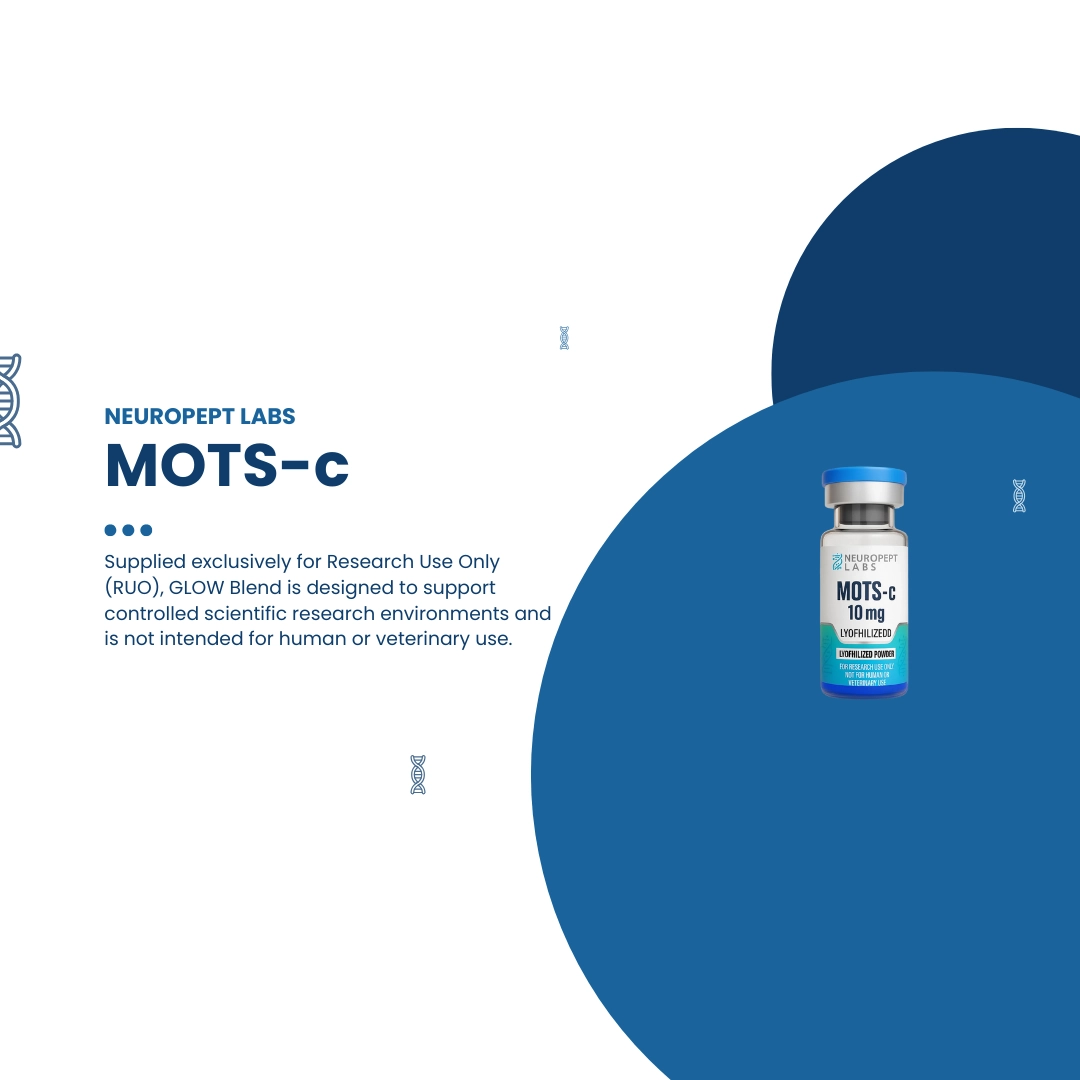
  • Format: supplied as a lyophilized powder with batch-specific third-party analytics.

What is MOTS-c?

MOTS-c (Mitochondrial Open reading frame of the Twelve-S rRNA type-c) is a 16-amino-acid peptide encoded by the mitochondrial 12S rRNA gene. Its discovery was notable because it showed that mitochondria — long viewed mainly as the cell’s power plants — also produce signaling molecules that act elsewhere in the cell. Its defining features include:

  • Mitochondrial-derived — encoded in mitochondrial rather than nuclear DNA.
  • Short peptide — a compact 16-amino-acid sequence.
  • Signaling role — acts beyond the mitochondrion, including in the nucleus under stress.
  • Exercise-responsive — its levels rise with physical activity in research observations.

The literature on this mitochondrial peptide is indexed in the PubMed database, where its rapidly growing research base is collected.

Mitochondrial-derived peptides: a new signaling class

To understand MOTS-c, it helps to understand the class it belongs to. Mitochondrial-derived peptides (MDPs) are encoded in the small mitochondrial genome and act as signaling molecules, a discovery that reframed how researchers think about mitochondria. Key points about the class:

  • Genomic source — derived from the compact mitochondrial DNA rather than the nucleus.
  • Retrograde signaling — they carry information from the mitochondrion to the rest of the cell.
  • Metabolic focus — many are studied for roles in energy balance and stress response.
  • Emerging field — MDPs are a comparatively recent research area with rapid growth.

MOTS-c is among the most studied members of this class, which is part of why it serves as a reference point in mitochondrial signaling research.

Mechanism: energy sensing and the AMPK pathway

MOTS-c’s metabolic effects in research are closely tied to AMP-activated protein kinase (AMPK), the cell’s master energy sensor. When energy demand rises, AMPK shifts metabolism toward energy production — and MOTS-c is studied as a modulator of this system. The mechanisms most often described are:

  • AMPK activation — promoting the energy-sensing pathway that governs metabolic adaptation.
  • Glucose metabolism — improving glucose uptake and handling in skeletal-muscle models.
  • Fat oxidation — shifting metabolism toward burning fat for fuel at the cellular level.
  • Nuclear translocation — moving to the nucleus under metabolic stress to influence gene expression.

Through these pathways, the peptide effectively reprograms aspects of cellular metabolism, which is the basis for its description as an exercise mimetic.

Why it is called an “exercise mimetic”

The exercise-mimetic label comes from a specific research observation: MOTS-c levels naturally increase during exercise, and supplying the peptide in models reproduces several of the same metabolic adaptations that training produces. This connection is studied along several lines:

  • Exercise-induced rise — circulating levels increase with physical activity in research.
  • Adaptation overlap — it triggers metabolic changes that resemble training adaptations.
  • Endurance models — studied for effects on exercise capacity and metabolic flexibility.
  • Training synergy — examined for whether it accelerates adaptation alongside activity.

It is important to frame this carefully: “exercise mimetic” describes a research concept about reproducing metabolic signals, not a claim that the peptide replaces exercise. The distinction matters for how findings are interpreted.

Research applications

Current laboratory and preclinical investigation involving MOTS-c spans several metabolic and aging domains. The following reflect documented research directions, not therapeutic claims:

  • Metabolic regulation — glucose metabolism and insulin sensitivity in muscle models.
  • Exercise physiology — endurance, capacity, and training-adaptation research.
  • Aging research — metabolic homeostasis and physical capacity across the lifespan.
  • Insulin resistance models — examining metabolic dysfunction pathways.
  • Mitochondrial signaling — characterizing retrograde communication from mitochondria.

The endpoints researchers commonly track in these models make the metabolic effects measurable:

  • Glucose uptake — insulin-stimulated and basal glucose handling in muscle cells.
  • AMPK activation — direct readout of the energy-sensing pathway.
  • Fat-oxidation markers — indicators of a shift toward burning fat for fuel.
  • Endurance measures — capacity and metabolic flexibility in exercise models.

Across these areas, the peptide is studied as a window into how mitochondrial signals shape whole-cell metabolism. As the research is still relatively young, human data exists but is best interpreted as early-stage physiology rather than settled conclusions.

The aging and metabolism connection

A recurring theme in MOTS-c research is its relationship to metabolic aging, which gives the peptide relevance beyond exercise physiology alone:

  • Age-related decline — mitochondrial function and related signaling tend to decline with age.
  • Metabolic homeostasis — the peptide is studied for maintaining metabolic balance in aging models.
  • Physical capacity — research examines links between mitochondrial signaling and functional capacity over time.
  • Insulin sensitivity — age-related insulin resistance is a focus of related work.

This framing places the mitochondrial peptide at an intersection of metabolism, exercise, and aging research — a combination that helps explain its broad and growing study.

How MOTS-c fits among metabolic research peptides

MOTS-c occupies a distinct niche compared with the incretin-based peptides that dominate much of metabolic research. Where compounds such as tirzepatide act on gut-hormone receptors at the cell surface, this peptide originates inside the mitochondrion and acts through intracellular energy-sensing pathways. That makes it a complementary rather than competing research tool:

  • Different entry point — intracellular energy sensing versus surface-receptor incretin signaling.
  • Different question — how mitochondrial signals shape metabolism, rather than how gut hormones do.
  • Complementary models — the two approaches can illuminate different layers of the same metabolic system.
  • Shared endpoints — both ultimately connect to glucose handling and energy balance.

For researchers mapping the metabolic landscape, this distinction is useful: the mitochondrial peptide adds a perspective that surface-receptor compounds cannot provide on their own, which is part of why it has become a reference point in its own right.

Handling, reconstitution, and quality verification

MOTS-c is supplied as a lyophilized powder, and its integrity affects the validity of metabolic models:

  • Storage — keep the lyophilized vial cold and protected from light until use.
  • Reconstitution — add diluent slowly down the vial wall and swirl gently rather than shaking.
  • Concentration records — note exact concentrations so metabolic-response models are accurate.
  • Documentation — confirm a batch-specific certificate of analysis (COA).

Every NeuroPept Labs batch is synthesized under controlled conditions and accompanied by a COA, verifiable at freedomdiagnosticstesting.com using the codes in the product images. For background on the incretin and metabolic peptides this research often intersects with, see our overview of GLP-1 peptides.

Considerations for experimental design

Studying a mitochondrial signaling peptide requires attention to the metabolic context in which it acts:

  • Metabolic baseline — energy status and glucose conditions are standardized across runs.
  • AMPK readouts — pathway activation is measured directly rather than inferred.
  • Model relevance — skeletal-muscle and metabolic-tissue models are chosen to match the question.
  • Verified material — high-purity peptide ensures observed effects reflect the compound itself.

With those controls, a MOTS-c study can connect a specific metabolic outcome to mitochondrial signaling rather than to the broader experimental conditions. As this field matures, that kind of mechanistic precision is what will separate durable findings from early enthusiasm — and it is why verified material and well-defined endpoints matter as much here as the peptide itself.

Frequently asked questions

What is MOTS-c used for in research?

In research, MOTS-c is studied as a mitochondrial-derived peptide and exercise mimetic, with a focus on glucose metabolism, insulin sensitivity, fat oxidation, and aging. It is used in metabolic and exercise-physiology models and is for in vitro and laboratory research only.

Why is MOTS-c called an exercise mimetic?

Because its levels rise with physical activity and, in research models, it reproduces several of the metabolic adaptations that exercise produces. The term describes a research concept about reproducing metabolic signals, not a claim that it replaces exercise.

What makes MOTS-c different from other peptides?

MOTS-c is encoded within the mitochondrial genome rather than nuclear DNA, making it part of a distinct class called mitochondrial-derived peptides. This origin and its link to the AMPK energy-sensing pathway set it apart.

How does MOTS-c relate to metabolism and aging?

It is studied for activating the AMPK energy-sensing pathway, improving glucose handling and fat oxidation in models, and for its relationship to metabolic homeostasis across the lifespan, which connects it to aging research.

What form does research-grade MOTS-c come in?

It is supplied as a lyophilized (freeze-dried) peptide powder that is reconstituted before laboratory use and stored under refrigeration, accompanied by a batch-specific certificate of analysis from an independent laboratory.

Is MOTS-c approved for human use?

No. MOTS-c offered for research is intended strictly for in vitro and laboratory investigation and is not approved for human consumption or clinical use. All information here is educational and not medical advice.

Research-use-only disclaimer: All products referenced are sold for laboratory and research use only. They are not intended to diagnose, treat, cure, or prevent any disease, and are not for human or veterinary consumption. Explore research-grade MOTS-c 10mg with third-party verified analytics from NeuroPept Labs.


Introduction to Peptides

Peptides are short chains of amino acids linked by peptide bonds, functioning as critical molecules in various biological processes. Understanding these compounds is crucial not only for scientists and healthcare professionals but also for fitness enthusiasts and entrepreneurs who are keen on harnessing their potential. This article delves into the diverse aspects of peptides, exploring their structure, functions, and applications, while shedding light on current research trends and their implications for the future.

Definition and Structure
peptide chain structure amino acids linked by peptide bonds scientific diagram

These compounds are defined as formed by the condensation of two or more amino acids, resulting in a chain that can range from a few to several dozen amino acids long. Each peptide possesses a unique sequence of amino acids, which determines its specific function within biological systems. Structurally, they can be categorized based on their length: dipeptides (two amino acids), tripeptides (three amino acids), oligopeptides (up to 20 amino acids), and polypeptides (more than 20 amino acids).

The structure of these compounds is pivotal for their function. They can fold into various three-dimensional shapes, influenced by their amino acid sequence. This folding is crucial for their binding to receptors and other proteins, thereby facilitating a wide range of biological activities. Understanding these structural nuances is fundamental for researchers aiming to manipulate functions for therapeutic purposes.

Types of Peptides

These compounds can be broadly categorized into different types based on their origin and function. Natural forms, such as hormones and neurotransmitters, are produced within the body and play vital roles in cellular communication and physiological regulation. On the other hand, synthetic forms are designed and manufactured in laboratories for specific applications, including research and therapeutic uses.

Some well-known examples include insulin, which regulates glucose metabolism; oxytocin, known for its role in social bonding; and growth hormone-releasing compounds, which are popular in fitness and bodybuilding communities for their purported benefits in muscle growth and recovery. Each type serves distinct functions, making them valuable in various fields, from medicine to sports science.

Natural vs. Synthetic Peptides

natural vs synthetic peptides comparison laboratory and biological environments

The distinction between natural and synthetic versions is significant, particularly in their applications and effectiveness. Natural forms are often more complex and can exhibit powerful biological activities, but they may also be subject to degradation and have a short half-life in the body. Synthetic variants, however, allow for greater control over structure and stability, making them ideal candidates for drug development and therapeutic interventions.

While synthetic peptides can mimic the action of natural peptides, they also provide the opportunity to create novel compounds that do not exist in nature, thereby expanding the potential for new therapeutic avenues. This adaptability is one of the driving forces behind the growing interest in peptide research and development.

Hypothesis on Functionality

Biological Role of Peptides

These compounds play an array of critical roles in biological systems. They function as signaling molecules, facilitating communication between cells and tissues. For instance, neuropeptides influence pain perception, stress responses, and appetite regulation. Hormonal forms, such as insulin and glucagon, are essential for metabolic regulation, while antimicrobial variations serve as a frontline defense against infections.

Additionally, peptides can modulate immune responses and cellular growth, making them indispensable in maintaining homeostasis. Their diverse functionalities highlight the importance of peptides in both health and disease, showcasing their potential as therapeutic agents in various medical conditions.

Mechanisms of Action

The mechanisms through which peptides exert their effects are multifaceted. Many peptides bind to specific receptors on cell surfaces, initiating a cascade of biochemical reactions that lead to physiological changes. For example, the binding of insulin to its receptor triggers glucose uptake in cells, regulating blood sugar levels.

They can also influence gene expression by interacting with intracellular pathways. This interaction can lead to the activation or inhibition of specific genes, profoundly impacting cellular behavior. Understanding these mechanisms is vital for developing treatments that leverage these pathways for therapeutic benefits.

Potential Applications in Medicine and Fitness

fitness and peptide research concept athletic performance recovery molecular science overlay

The potential applications of these compounds extend across various domains, particularly in medicine and fitness. In medicine, they are being explored as therapeutic agents for conditions such as diabetes, cancer, and cardiovascular diseases. Their specificity and ability to target particular pathways make them suitable candidates for precision medicine.

In the fitness world, peptides such as growth hormone-releasing peptides (GHRPs) have gained popularity for their purported benefits in muscle growth, fat loss, and recovery. While some athletes and bodybuilders advocate for their use, the regulatory landscape surrounding peptide supplementation remains contentious, necessitating further research and education on their safety and efficacy.

Potential in Research

Current Research Trends

The field of research is rapidly evolving, with ongoing studies focusing on understanding interactions at the molecular level. Researchers are exploring innovative methods for synthesizing these compounds more efficiently and with greater specificity. Advances in technologies such as mass spectrometry and high-throughput screening have significantly accelerated discovery and characterization.

Emerging research also aims to understand the multifaceted roles of peptides beyond their traditional uses. For instance, studies are investigating the effects of peptides on gut health, cognitive function, and aging. This expanding scope of research underscores the growing recognition of peptides as versatile molecules with diverse therapeutic potential.

These Compounds in Drug Development

Peptides are gaining traction in drug development due to their high specificity and lower likelihood of side effects compared to small molecule drugs. Pharmaceutical companies are increasingly investing in peptide therapeutics, leading to the approval of several peptide-based drugs for various medical conditions.

The development of drugs often involves careful optimization of their structure to enhance stability and bioavailability. Recent innovations, such as pegylation and the use of non-natural amino acids, are being employed to improve the pharmacokinetic properties of therapeutic variants, paving the way for more effective treatments.

Innovative Uses in Biotechnology

Beyond traditional applications, these compounds are being harnessed in biotechnology for diverse purposes. They are used in the development of biosensors, targeted drug delivery systems, and even in vaccine formulations. Their ability to specifically bind to certain biomolecules makes them ideal for creating highly sensitive diagnostic tools.

Moreover, peptides are being engineered to serve as scaffolds for complex biomolecules, facilitating advancements in tissue engineering and regenerative medicine. These innovative applications demonstrate the versatility of peptides and their critical role in the next generation of biotechnological solutions.

Achievements So Far

Key Milestones in Peptide Research

Over the years, research has achieved several significant milestones. The development of insulin in the early 1920s marked a pivotal moment in medical history, providing a breakthrough in diabetes management. Since then, numerous therapeutics based on these compounds have been approved, addressing various health issues and improving patient outcomes.

Recent advancements in peptide synthesis techniques, including solid-phase peptide synthesis and automated synthesis platforms, have revolutionized the field. These technologies have enabled researchers to produce peptides more efficiently and with higher purity, facilitating their use in clinical settings.

Successful Case Studies

Several successful case studies exemplify the potential of peptides in clinical applications. For instance, GLP-1 receptor agonists, such as liraglutide, have demonstrated efficacy in managing type 2 diabetes, exemplifying how peptide-based drugs can improve glycemic control and promote weight loss.

In oncology, vaccines have shown promise in eliciting immune responses against cancer cells, demonstrating the potential of these compounds in cancer immunotherapy. These case studies not only highlight the therapeutic benefits but also pave the way for further exploration in the field.

Challenges Overcome in the Field

Despite the progress made in research, several challenges remain. One of the primary hurdles is the stability of these compounds, which can be susceptible to degradation in biological environments. Researchers are actively developing various strategies to enhance stability, including modifications to their structure and formulation.

Another challenge is the regulatory landscape surrounding peptide therapeutics, which can be complex and time-consuming. Navigating the regulatory requirements for peptide drugs requires a comprehensive understanding of both chemistry and biology, necessitating collaboration between scientists, clinicians, and regulatory bodies to ensure safety and efficacy.

Early-Adopters: Benefits and Results

Success Stories from Fitness Enthusiasts

Fitness enthusiasts have increasingly turned to these compounds for their potential benefits in enhancing athletic performance and recovery. Many individuals report positive experiences with variants such as BPC-157 and TB-500, which are believed to promote healing and muscle repair. Testimonials often highlight improved recovery times and reduced injury rates, contributing to a growing interest in supplementation.

However, it is crucial to approach these success stories with caution. While anecdotal evidence is compelling, scientific validation is essential to substantiate the claims surrounding peptide use in fitness. Ongoing research will help clarify the actual benefits and risks associated with peptide supplementation in athletic populations.

Real-World Applications in Healthcare

In healthcare settings, peptides have been integrated into various treatment protocols, particularly in managing chronic diseases. For example, peptide-based therapies for obesity and metabolic disorders are being explored to improve patient outcomes. Clinical trials have reported significant improvements in weight loss and metabolic markers among participants receiving peptide treatments.

These real-world applications underscore the importance of ongoing research to further validate the safety and efficacy of these therapies. As more evidence emerges, healthcare professionals can better tailor treatments to meet the needs of their patients, enhancing the overall quality of care.

Feedback from Professionals and Consumers

Feedback from healthcare professionals, fitness trainers, and consumers is invaluable in shaping the future of research and application. Professionals express a desire for more comprehensive education on use, highlighting the need for clear guidelines and evidence-based practices. Consumers, on the other hand, often seek transparency regarding product sourcing, efficacy, and potential side effects.


Conclusion

Summary of Key Insights

These compounds represent a fascinating and rapidly evolving field with significant implications for medicine, fitness, and biotechnology. Their diverse functions and potential applications make them valuable tools in addressing various health issues and enhancing athletic performance. Understanding the structure, mechanisms, and current research trends is essential for appreciating the complexity and potential of these molecules.

Future Directions in Peptide Research

biotechnology laboratory peptide research future medical innovation environment

Looking ahead, the future of research is promising. Advances in synthesis, delivery methods, and a deeper understanding of their biological roles will likely lead to innovative therapies that can address unmet medical needs. Continued collaboration between researchers, healthcare professionals, and regulatory bodies will be vital in navigating the challenges and opportunities that lie ahead.

Final Thoughts on Peptide Potential

As our understanding of these compounds continues to grow, so too does their potential to revolutionize the fields of medicine and fitness. By exploring and validating the various roles that they can play, we can unlock new avenues for treatment and performance enhancement, ultimately improving health outcomes and quality of life for individuals across a spectrum of needs.

FAQs

What are peptides?

Peptides are short chains of amino acids linked by peptide bonds that play crucial roles in various biological functions.

How are peptides used in medicine?

Peptides are used in medicine as therapeutic agents for conditions such as diabetes, cancer, and cardiovascular diseases.

Are synthetic peptides safe to use?

While many synthetic peptides have been rigorously tested, their safety and efficacy vary. It’s essential to consult a healthcare professional before use.

Can peptides enhance athletic performance?

Some peptides are believed to enhance athletic performance by promoting muscle growth and recovery, but scientific validation is necessary to substantiate these claims.

What challenges do peptide drugs face?

Peptide drugs face challenges such as stability in biological environments and navigating complex regulatory frameworks.

Introduction

Metabolic peptide research has expanded significantly over the past decade, with scientists exploring compounds that influence glucose regulation, mitochondrial function, energy metabolism, and hormonal signaling.

Several peptides are currently attracting attention in metabolic and endocrinology research due to their interactions with incretin pathways, mitochondrial signaling, and growth hormone modulation.

This guide highlights some of the most commonly studied peptides in metabolic research laboratories.


1. Retatrutide (GLP-3RT)

One of the most discussed metabolic peptides in recent research is Retatrutide.

Retatrutide functions as a triple receptor agonist, interacting with:

“¢ GLP-1 receptors
“¢ GIP receptors
“¢ glucagon receptors

Because of this multi-receptor interaction, researchers study Retatrutide for its potential role in metabolic signaling and energy regulation pathways.


2. Tirzepatide

Another widely studied peptide is Tirzepatide, which activates both GLP-1 and GIP receptors.

Dual incretin activation allows researchers to investigate:

“¢ insulin signaling pathways
“¢ appetite-related hormonal signals
“¢ glucose metabolism

Tirzepatide is often compared with newer triple-agonist peptides such as Retatrutide.


3. MOTS-C

MOTS-C is a mitochondrial-derived peptide studied for its potential role in cellular metabolism and mitochondrial signaling.

Unlike incretin peptides, MOTS-C operates at the cellular energy level and is investigated in research involving:

“¢ mitochondrial metabolism
“¢ exercise physiology
“¢ metabolic adaptation


4. CJC-1295

CJC-1295 is commonly used in endocrine research studying growth hormone signaling.

It stimulates the release of growth hormone through the growth hormone releasing hormone pathway.

Researchers often combine CJC-1295 with other peptides when studying hormonal regulatory systems.


5. Ipamorelin

Ipamorelin is another peptide frequently used in research environments.

It interacts with ghrelin receptors and is studied for its effects on growth hormone signaling pathways and metabolic regulation.


Why Metabolic Peptides Are Important in Research

Metabolic peptides allow researchers to study complex physiological systems including:

“¢ endocrine signaling
“¢ appetite regulation pathways
“¢ mitochondrial metabolism
“¢ hormonal feedback loops

As peptide science advances, multi-receptor agonists and mitochondrial peptides are becoming increasingly relevant to metabolic studies.


Research Disclaimer

Peptides described in this article are intended strictly for laboratory research purposes and are not approved for human consumption.


FAQ

What are metabolic peptides?

Metabolic peptides are compounds studied in laboratories for their interaction with pathways that regulate metabolism, hormone signaling, and cellular energy.

Why are incretin peptides important?

Incretin peptides interact with receptors involved in glucose and metabolic signaling, making them valuable for metabolic research.

Mitochondrial-derived peptides have become an area of growing interest in modern biological research. Among these compounds, MOTS-c has attracted significant attention due to its role in cellular metabolism, mitochondrial signaling, and stress-response pathways.

Read more “MOTS-c 10mg: A Synthetic Research Peptide for Metabolic and Mitochondrial Studies”

SIGN UP TO OUR NEWSLETTER AND SAVE 10% OFF FOR YOUR NEXT PURCHASE

Let's connect! Access Research-Grade Peptide Insights

Join our research newsletter to receive technical updates, documentation guides, and educational content on synthetic peptides and laboratory standards.
All materials are provided for Research Use Only.