PT-141, also known as Bremelanotide, is a synthetic peptide studied for its effects on sexual arousal, libido signaling, and central nervous system activation. Unlike traditional compounds that work through blood-flow mechanisms, PT-141 acts directly on the melanocortin receptors in the brain, which play a role in sexual motivation and desire.
In research settings, PT-141 has attracted attention for its ability to influence sexual response pathways, libido regulation, and neurological signaling associated with arousal. Scientists studying peptide signaling and neuroendocrine function often explore PT-141 to better understand how melanocortin pathways impact sexual behavior, mood, and hormonal interaction.
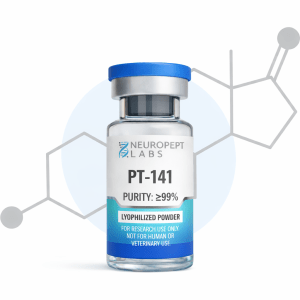
PT-141 10mg vial
PT-141 is a synthetic heptapeptide derived from the melanocortin system and is most commonly referred to in the literature as bremelanotide. It is structurally related to melanocortin peptide analogues and has been studied as an agonist at melanocortin receptors, especially MC3R and MC4R. In research discussions, PT-141 is often highlighted for its distinct mechanism because it acts primarily in the central nervous system rather than on vascular tissue.
How PT-141 Works
Bremelanotide synthesis scheme
The primary research interest in PT-141 centers on its agonist activity at melanocortin receptors, especially MC4R, which is heavily expressed in brain regions involved in sexual motivation and behavior. Activation of these receptors triggers downstream intracellular signaling, including cAMP-related pathways, which helps explain PT-141’s central effects. This makes it a mechanistically distinct peptide compared with therapies that rely on nitric oxide and vascular smooth muscle relaxation.
In simpler terms, PT-141 is studied because it may influence the brain’s sexual response circuitry rather than acting directly on blood flow alone. That distinction is one reason it has drawn attention in both preclinical and clinical research settings.
Research Background and Clinical Interest
Brain activation meta-analysis

PT-141 first gained attention because animal and early human research suggested that melanocortin receptor activation could produce measurable effects on sexual function. Later clinical research led to bremelanotide being investigated for hypoactive sexual desire disorder, with phase 3 studies showing statistically significant improvements in sexual desire and reductions in distress compared with placebo. Those results made it one of the more recognized peptides in this niche area of research PT-141 clinical research
The broader significance of PT-141 is that it demonstrates how peptide-based compounds can influence behavior through neurochemical pathways, not just through hormonal or circulatory mechanisms. That makes it especially relevant to researchers interested in neuroendocrinology, motivational circuitry, and central receptor signaling.
Why Researchers Study It
PT-141 is frequently discussed in research because it offers a different angle from conventional sexual function therapies. Rather than focusing on vascular response, it is associated with central melanocortin signaling, which opens questions about receptor selectivity, neural pathways, and behavioral outcomes. This makes it useful not only in sexual function research but also in studies of motivation, reward, and hypothalamic signaling Bremelanotide mechanism of action
For educational and academic audiences, PT-141 is a strong example of how peptide pharmacology can bridge molecular biology and functional neuroscience. That combination is part of what keeps it relevant in peptide research discussions today.
Safety, Handling, and Research Context

In a research context, PT-141 should be handled according to the appropriate laboratory and institutional standards, with clear attention to purity, storage, documentation, and intended use. As with any research peptide, the quality of the material and the consistency of handling conditions matter when evaluating results or comparing studies. Researchers should always distinguish between laboratory research materials and any regulated or approved pharmaceutical formulations.
Current Research Directions
Current interest in PT-141 continues to focus on receptor selectivity, central signaling, and outcome variability across different study populations. Researchers are also interested in how melanocortin agonists interact with broader neurochemical systems such as dopamine and serotonin. These questions matter because they help explain why PT-141 can produce effects that are central and behavior-linked rather than purely peripheral.
Another area of interest is how bremelanotide may fit into future peptide research pipelines, especially where research-grade sourcing, reproducibility, and formulation quality are important. As the field grows, PT-141 remains a notable compound for laboratories studying the interface between peptides and behavior.
A Subtle Note for Researchers
For labs building a peptide-focused catalogue, PT-141 is one of the compounds many teams keep on their watchlist because of its unique receptor profile and growing research relevance. NeuroPept Labs will be adding PT-141 soon, making it easier for research teams to explore this compound within a high-purity peptide lineup.