PT-141, also known as Bremelanotide, is a synthetic peptide studied for its effects on sexual arousal, libido signaling, and central nervous system activation. Unlike traditional compounds that work through blood-flow mechanisms, PT-141 acts directly on the melanocortin receptors in the brain, which play a role in sexual motivation and desire.

In research settings, PT-141 has attracted attention for its ability to influence sexual response pathways, libido regulation, and neurological signaling associated with arousal. Scientists studying peptide signaling and neuroendocrine function often explore PT-141 to better understand how melanocortin pathways impact sexual behavior, mood, and hormonal interaction.

PT-141 10mg vial
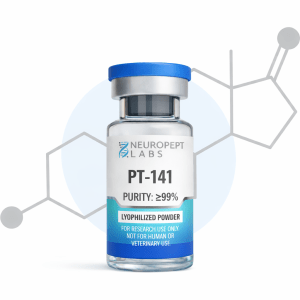
PT-141 bremelanotide vial peptide NeuroPept Labs

PT-141 is a synthetic heptapeptide derived from the melanocortin system and is most commonly referred to in the literature as bremelanotide. It is structurally related to melanocortin peptide analogues and has been studied as an agonist at melanocortin receptors, especially MC3R and MC4R. In research discussions, PT-141 is often highlighted for its distinct mechanism because it acts primarily in the central nervous system rather than on vascular tissue.

How PT-141 Works

Bremelanotide synthesis schemePT-141 bremelanotide molecule

The primary research interest in PT-141 centers on its agonist activity at melanocortin receptors, especially MC4R, which is heavily expressed in brain regions involved in sexual motivation and behavior. Activation of these receptors triggers downstream intracellular signaling, including cAMP-related pathways, which helps explain PT-141’s central effects. This makes it a mechanistically distinct peptide compared with therapies that rely on nitric oxide and vascular smooth muscle relaxation.

In simpler terms, PT-141 is studied because it may influence the brain’s sexual response circuitry rather than acting directly on blood flow alone. That distinction is one reason it has drawn attention in both preclinical and clinical research settings.

Research Background and Clinical Interest

Brain activation meta-analysis
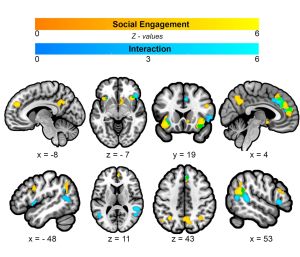
PT-141 Bramalanotide brain pathway visual

PT-141 first gained attention because animal and early human research suggested that melanocortin receptor activation could produce measurable effects on sexual function. Later clinical research led to bremelanotide being investigated for hypoactive sexual desire disorder, with phase 3 studies showing statistically significant improvements in sexual desire and reductions in distress compared with placebo. Those results made it one of the more recognized peptides in this niche area of research PT-141 clinical research

The broader significance of PT-141 is that it demonstrates how peptide-based compounds can influence behavior through neurochemical pathways, not just through hormonal or circulatory mechanisms. That makes it especially relevant to researchers interested in neuroendocrinology, motivational circuitry, and central receptor signaling.

Why Researchers Study It

PT-141 is frequently discussed in research because it offers a different angle from conventional sexual function therapies. Rather than focusing on vascular response, it is associated with central melanocortin signaling, which opens questions about receptor selectivity, neural pathways, and behavioral outcomes. This makes it useful not only in sexual function research but also in studies of motivation, reward, and hypothalamic signaling Bremelanotide mechanism of action


For educational and academic audiences, PT-141 is a strong example of how peptide pharmacology can bridge molecular biology and functional neuroscience. That combination is part of what keeps it relevant in peptide research discussions today.

Safety, Handling, and Research Context

NeuroPept Labs lab research development peptides

In a research context, PT-141 should be handled according to the appropriate laboratory and institutional standards, with clear attention to purity, storage, documentation, and intended use. As with any research peptide, the quality of the material and the consistency of handling conditions matter when evaluating results or comparing studies. Researchers should always distinguish between laboratory research materials and any regulated or approved pharmaceutical formulations.

Current Research Directions

Current interest in PT-141 continues to focus on receptor selectivity, central signaling, and outcome variability across different study populations. Researchers are also interested in how melanocortin agonists interact with broader neurochemical systems such as dopamine and serotonin. These questions matter because they help explain why PT-141 can produce effects that are central and behavior-linked rather than purely peripheral.

Another area of interest is how bremelanotide may fit into future peptide research pipelines, especially where research-grade sourcing, reproducibility, and formulation quality are important. As the field grows, PT-141 remains a notable compound for laboratories studying the interface between peptides and behavior.

A Subtle Note for Researchers

For labs building a peptide-focused catalogue, PT-141 is one of the compounds many teams keep on their watchlist because of its unique receptor profile and growing research relevance. NeuroPept Labs will be adding PT-141 soon, making it easier for research teams to explore this compound within a high-purity peptide lineup.

Oxytocin is one of the most extensively studied neuropeptides in modern biomedical research. Synthesised in the hypothalamus and released by the posterior pituitary gland, this nine-amino-acid peptide operates far beyond its classical role in parturition and lactation “” it sits at the intersection of neurobiology, psychiatry, endocrinology, and behavioural science. Understanding its mechanisms is increasingly central to unlocking new therapeutic horizons.


What Is Oxytocin?
Oxytocin hormone

Oxytocin (OXT) is a cyclic nonapeptide with the amino acid sequence Cys-Tyr-Ile-Gln-Asn-Cys-Pro-Leu-Gly-NHâ‚‚, characterised by a disulfide bridge between positions 1 and 6 that is essential for its biological activity. It is produced primarily by magnocellular neurons in the paraventricular nucleus (PVN) and supraoptic nucleus (SON) of the hypothalamus.

As a pleiotropic hormone, oxytocin acts both peripherally “” on smooth muscle in the uterus and mammary glands “” and centrally, as a neuromodulator influencing synaptic transmission across multiple brain circuits. This dual nature makes it a particularly compelling subject of laboratory investigation.


Molecular Mechanism of Action

Oxytocin Molecular Mechanism of Action

Oxytocin exerts its effects primarily through the oxytocin receptor (OXTR), a G-protein-coupled receptor (GPCR) linked to Gq proteins. Upon binding, OXTR activation triggers phospholipase C (PLC), generating inositol trisphosphate (IP₃) and diacylglycerol (DAG), ultimately raising intracellular calcium concentrations via both endoplasmic reticulum release and extracellular influx.

At the synaptic level, oxytocin modulates both excitatory and inhibitory neurotransmission in a region-specific manner. Research demonstrates that activation of presynaptic oxytocin receptors in the hippocampus enhances glutamate release, while dendritically released oxytocin can paradoxically suppress excitatory transmission through modulation of N-type and P/Q-type voltage-dependent calcium channels. This bidirectionality reflects a sophisticated, context-dependent tuning of neural circuits.

Additionally, oxytocin receptor knockout studies have identified structural consequences at the synapse level, including reduction of postsynaptic density protein 95 (PSD-95), altered dendritic complexity, and shifts in the ratio of excitatory to inhibitory presynapses “” underscoring its role as a synaptogenic regulator.


Neuroplasticity and Trophic Effects

hypothalamus and pituitary diagram

Beyond acute signalling, OXT has been shown to stimulate neurogenesis in the hippocampus and modulate expression of key neurotrophic factors, including brain-derived neurotrophic factor (BDNF) and nerve growth factor (NGF). These findings position oxytocin as a potential modulator of long-term neural plasticity, with implications for learning, memory formation, and resilience.

Research also demonstrates that oxytocin promotes the expression of cytoskeletal proteins such as drebrin and vimentin, proteins associated with neurite growth “” suggesting an architectural role in shaping dendritic morphology.


Social Behaviour, Trust, and the “Bonding” Hypothesis

Brain activation meta-analysis

Oxytocin earned its popular designation as the “love hormone” or “bonding neuropeptide” through decades of research linking it to trust, empathy, attachment, and prosocial behaviour. Studies consistently show that social interaction triggers oxytocin release in the nucleus accumbens and prefrontal cortex “” regions associated with reward processing and social cognition.

Neuroimaging research reveals that intranasal OXT administration reduces amygdala reactivity to social threat cues while enhancing functional connectivity between the amygdala and prefrontal cortex during social evaluation tasks. However, the scientific community has increasingly moved toward a more nuanced picture: rather than simply promoting sociability, oxytocin appears to modulate social salience “” amplifying attentional processing of socially relevant stimuli, whether positive or negative.


Therapeutic Research Directions

Scientists in cleanroom lab

The neurobiological implications of oxytocin dysregulation have made it a high-priority target in several clinical research domains:

  • Social Anxiety Disorder (SAD): Clinical trials of intranasal oxytocin have demonstrated promising reductions in social fear responses, enhanced emotion recognition, and increased social approach behaviour, though results remain mixed due to individual variability in OXTR expression

  • Autism Spectrum Disorder (ASD): Preclinical and clinical data suggest oxytocin may enhance time-dependent social responses and partially compensate for deficits in social cognition associated with ASD

  • PTSD and Trauma Memory: Emerging research is investigating oxytocin’s role in memory consolidation following traumatic experiences, with early findings exploring its potential to modulate involuntary trauma recall

  • Metabolic Regulation: A 2026 Frontiers in Endocrinology analysis highlights oxytocin’s dual mechanism in appetite regulation “” simultaneously dampening subcortical hedonic food-motivation pathways while enhancing prefrontal cognitive control during food cue exposure

  • Stress and HPA Axis Modulation: Oxytocin’s ability to regulate the hypothalamic-pituitary-adrenal (HPA) axis plays a documented role in emotional regulation and stress resilience


Research Administration Routes and Considerations

In preclinical and early-phase clinical research, oxytocin has been administered through several routes: intravenous, subcutaneous, and “” most commonly in human studies “” intranasal delivery, which enables partial bypassing of the blood-brain barrier via the olfactory and trigeminal pathways. Key research variables under active investigation include optimal dosing protocols, administration timing, biological sex differences in receptor distribution, and individual genetic variation in the OXTR gene.

It is important to note that all research involving exogenous oxytocin must be conducted under appropriate institutional oversight, following RUO (Research Use Only) designations and applicable regulatory frameworks.


Current Landscape and Future Directions

The scientific literature on oxytocin has expanded dramatically over the past decade, reflecting its broad biological significance. Future research is expected to focus on:

  • Large-scale randomised controlled trials for psychiatric applications

  • Long-term efficacy and safety profiling of oxytocin analogues

  • Development of selective, small-molecule OXTR agonists as more stable alternatives

  • Interdisciplinary integration of genomics, neuroimaging, and behavioural data to stratify patient populations

The scientific community broadly agrees that oxytocin is not a “magic molecule,” but rather a sophisticated modulator whose therapeutic potential will be best unlocked through rigorous, reproducible research design.


A Note on Research-Grade Oxytocin

Oxytocin

As interest in oxytocin research grows across academic and pharmaceutical institutions, demand for high-purity, well-characterised research-grade peptides continues to rise. At NeuroPept Labs, we are committed to supplying the scientific community with rigorously quality-controlled research compounds. Oxytocin is a peptide we are currently preparing to add to our catalogue “” stay tuned for its release, and be among the first to access it for your laboratory’s research programme.


Disclaimer: All products offered by NeuroPept Labs are intended strictly for in vitro laboratory research and are not approved for human consumption, therapeutic use, or veterinary application. This article is for educational and scientific informational purposes only.

Meta Description: Explore the neuroscience of oxytocin “” its molecular mechanisms, role in social bonding, synaptic plasticity, and emerging therapeutic research. A research-grade educational overview by NeuroPept Labs.

All products on this site are for research and development use only. Products are not for human consumption of any kind. The statements made on this website have not been evaluated by the US Food and Drug Administration. The statements and the products of this company are not intended to diagnose, treat, cure, or prevent any disease.

Neuro Peptide Labs is a chemical supplier. Neuro Peptide Labs is not a compounding pharmacy or chemical compounding facility as defined under 503A of the Federal Food, Drug, and Cosmetic Act. Neuro Peptide Labs is not an outsourcing facility as defined under 503B of the Federal Food, Drug, and Cosmetic Act.

All products are sold for research, laboratory, or analytical purposes only, and are not for human consumption.

SIGN UP TO OUR NEWSLETTER AND SAVE 10% OFF FOR YOUR NEXT PURCHASE

Let's connect! Access Research-Grade Peptide Insights

Join our research newsletter to receive technical updates, documentation guides, and educational content on synthetic peptides and laboratory standards.
All materials are provided for Research Use Only.